
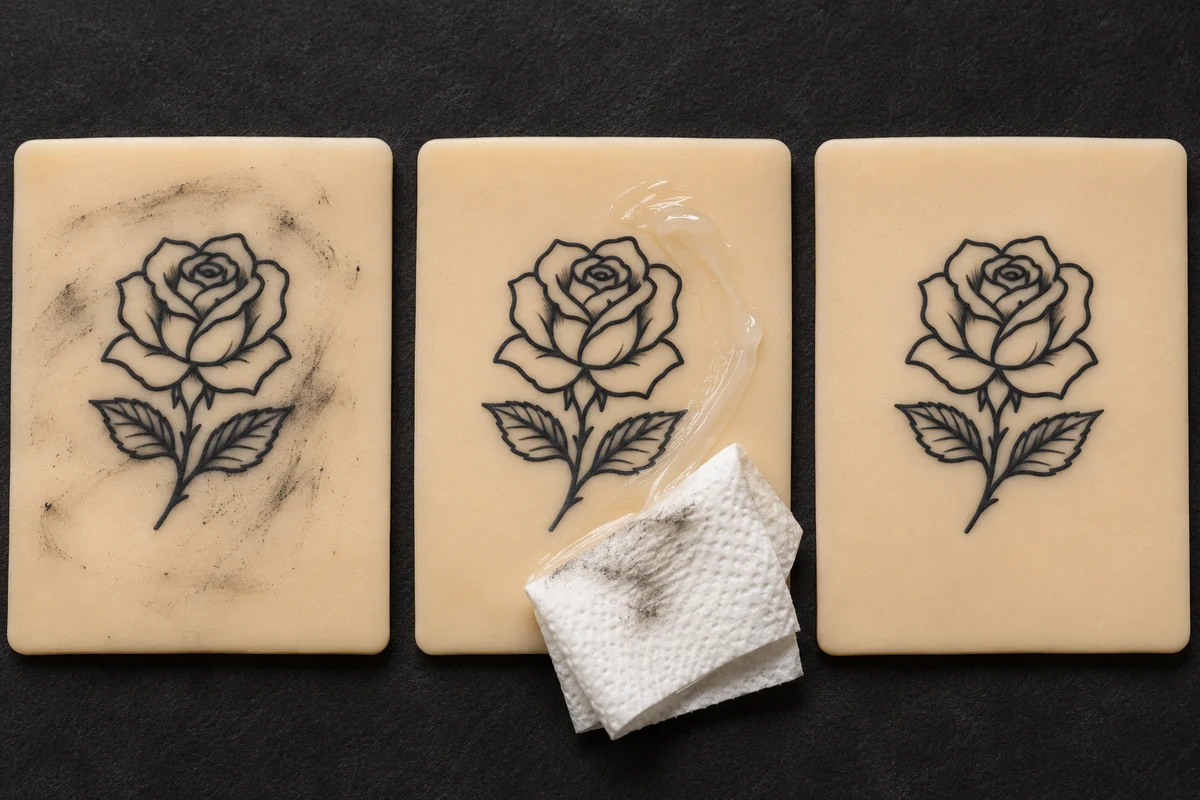
You finish a practice tattoo, wipe the sheet, and watch a black streak spread across the design. The lines may be fine underneath, but the surface ink makes it hard to tell.
To clean fake tattoo skin, blot away loose ink, gently work a compatible ointment over the remaining residue, and lift it off with a fresh paper towel. Petroleum jelly is one option for some practice skins; use the product your sheet’s manufacturer recommends.
The goal is to clear the surface so you can judge your lines and shading. You are not trying to erase the tattoo or scrub the sheet back to its original color.
What you’ll need
- Soft, disposable paper towels
- An ointment or cleaner approved for your practice skin
- Clean gloves and a flat, protected work surface
Practice skins vary in material and finish. Check the care instructions before using a new cleaner, and test it on an unused corner before applying it near a finished design.
How to clean fake skin after tattooing
1. Blot up loose ink first
Lay the sheet flat and support it with one hand. Dab visible pools of ink with a clean paper towel. Fold the towel as you go so each dab uses a clean section.
If a wipe leaves a longer streak than the one you started with, change the towel before continuing. A saturated towel simply moves pigment around.
2. Apply a small amount of compatible ointment
Spread a little of the recommended product over a smudged area. Start with one small section rather than coating the entire sheet; this makes it easier to see whether the method is working.
If petroleum jelly is suitable for your practice skin, gently work it over the surface residue. You do not need to press hard or stretch the sheet to clean it.
3. Lift the residue with a fresh towel
Use a soft towel to lift away the ointment and loose ink. Keep your movements short and controlled, and use a fresh section whenever it picks up pigment.
Check the area under good light before repeating. Continue only while the cleanup is visibly improving the surface.
4. Stop if the surface starts to change
Do not scrub harder to chase a faint mark. Stop if you see tearing, rough patches or changes to your lines. If cleanup reveals cuts or grooves, our guide to why fake skin tears during tattoo practice can help you review the sheet and your technique.
5. Remove the remaining cleaning product
Lift off leftover ointment with a clean towel. If the manufacturer’s instructions call for a final wash or rinse, follow that step and pat the sheet dry.
Before taking photos, check for oily glare. A greasy patch can hide fine lines or make smooth shading look uneven.
How to remove ink stains from fake skin
When a mark will not budge, first work out what it is. Loose ink, surface discoloration, stencil residue and tattooed pigment are not interchangeable.
| What you see | What to do next |
|---|---|
| Ink transfers to a clean towel | Continue gently with the compatible cleaning product. |
| A faint haze remains, with little or no improvement | Pause and check the manufacturer’s stain-removal guidance. |
| The original stencil outline is still visible | Follow a stencil-removal method approved for the sheet. |
| The mark follows your tattooed lines or shading | Do not expect surface cleaning to erase deposited pigment. |
For a stubborn surface stain, test any recommended treatment on an unused edge first. Make one gentle pass, wipe away the residue, and compare the result. If it is no cleaner, repeating the same treatment with more pressure is unlikely to help preserve the piece.
A slight stain is a better trade-off than damaged lines. Avoid improvising with bleach, acetone or other strong household cleaners unless the practice-skin manufacturer explicitly supports that method.
How to keep fake skin clean while tattooing
The easiest cleanup starts during the session. Build these habits into your practice:
- Blot buildup before it hides your lines. Small amounts of loose ink are easier to control than a large smear.
- Keep clean towel sections ready. Replace a dirty towel instead of making another pass with it.
- Use glide sparingly and as directed. A thick coating can obscure the work and leave more residue to remove later.
- Plan your working direction. Keep your hand and cleanup movements away from stencil areas you have not tattooed yet.
- Record what works. Note the practice-skin brand and cleaning product so you can repeat a successful routine.
What to do about leftover stencil marks
An ointment that lifts loose tattoo ink may leave the transferred guide behind. Check which stencil-removal method is suitable for your practice skin, including whether it can be used after the sheet has been tattooed.
Test away from the design first. If the remaining stencil is faint and does not obscure your work, leaving it alone may give you a better result than another round of cleaning.
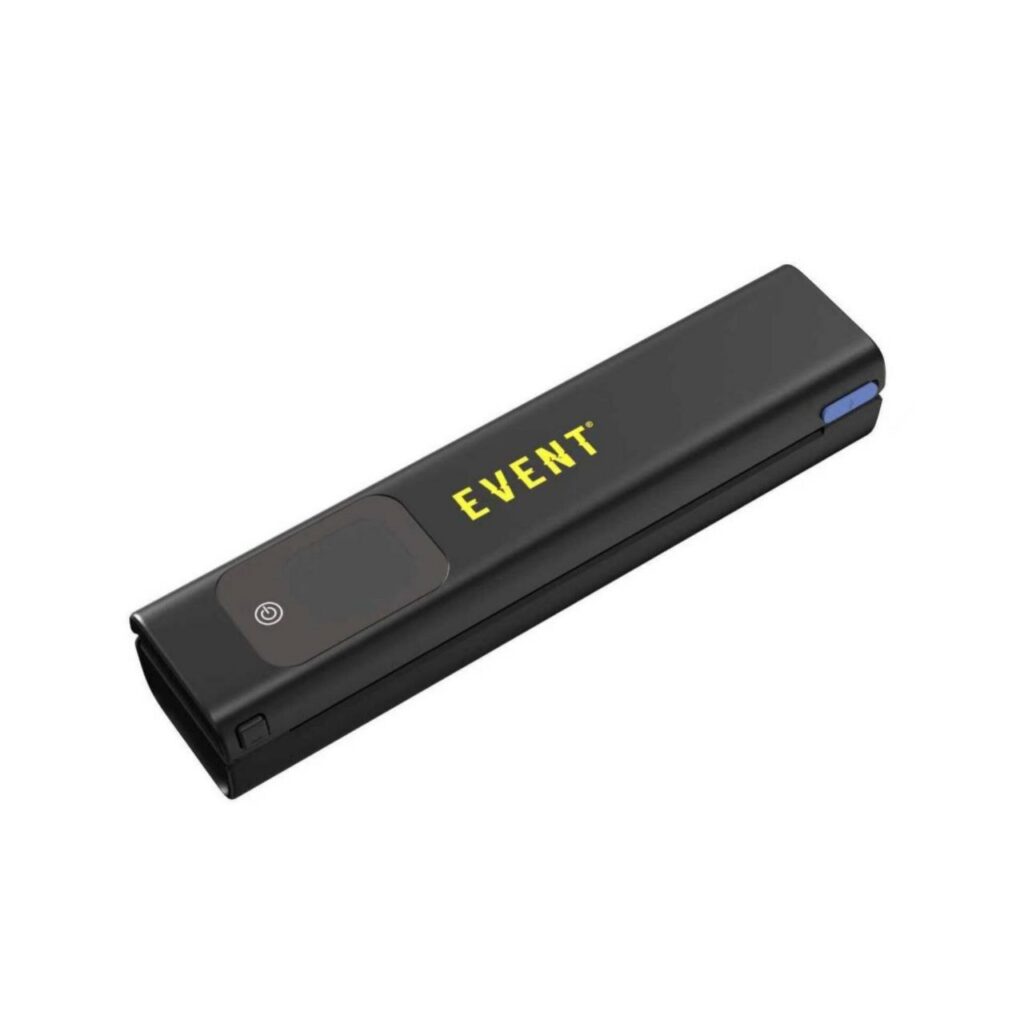
For your next practice piece, see how to use a tattoo stencil printer to prepare the outline. If you need transfer sheets, Event Thermal Paper for tattoo stencils is designed for both hand-drawn and printed designs. Follow your practice skin’s instructions when applying the transfer.
Frequently asked questions
Can you clean fake tattoo skin with Vaseline?
Yes, if petroleum jelly is compatible with your practice skin. Gently work it over loose surface ink, then lift away the mixture with fresh paper towels. It will not turn a tattooed area into a blank sheet.
Can you use green soap on fake skin?
Check the instructions for the sheet and the soap. If the manufacturer permits green soap, use the specified dilution. Do not keep soaking or scrubbing a stain that is not improving.
Can you use rubbing alcohol on tattoo practice skin?
Only if the manufacturer confirms it is suitable for that material and task. Alcohol should not be your automatic next step when an ointment leaves a mark behind.
Why is my fake skin still stained after cleaning?
You may be seeing persistent discoloration, leftover stencil or tattooed pigment rather than loose ink. Identify the mark before trying another cleaner. A clean surface does not always look completely unstained.
Can you reuse fake skin after cleaning it?
You can practice on unused areas if the sheet is still in good condition. Cleaning does not reverse needle punctures or reliably erase the design, so previously tattooed sections are not fresh practice surfaces.
How do you prepare a practice tattoo for photos?
Remove loose ink and leftover cleaning product, then let the surface dry. Use even lighting and keep oily glare out of the shot so the photo shows the actual lines, shading and surface condition.