
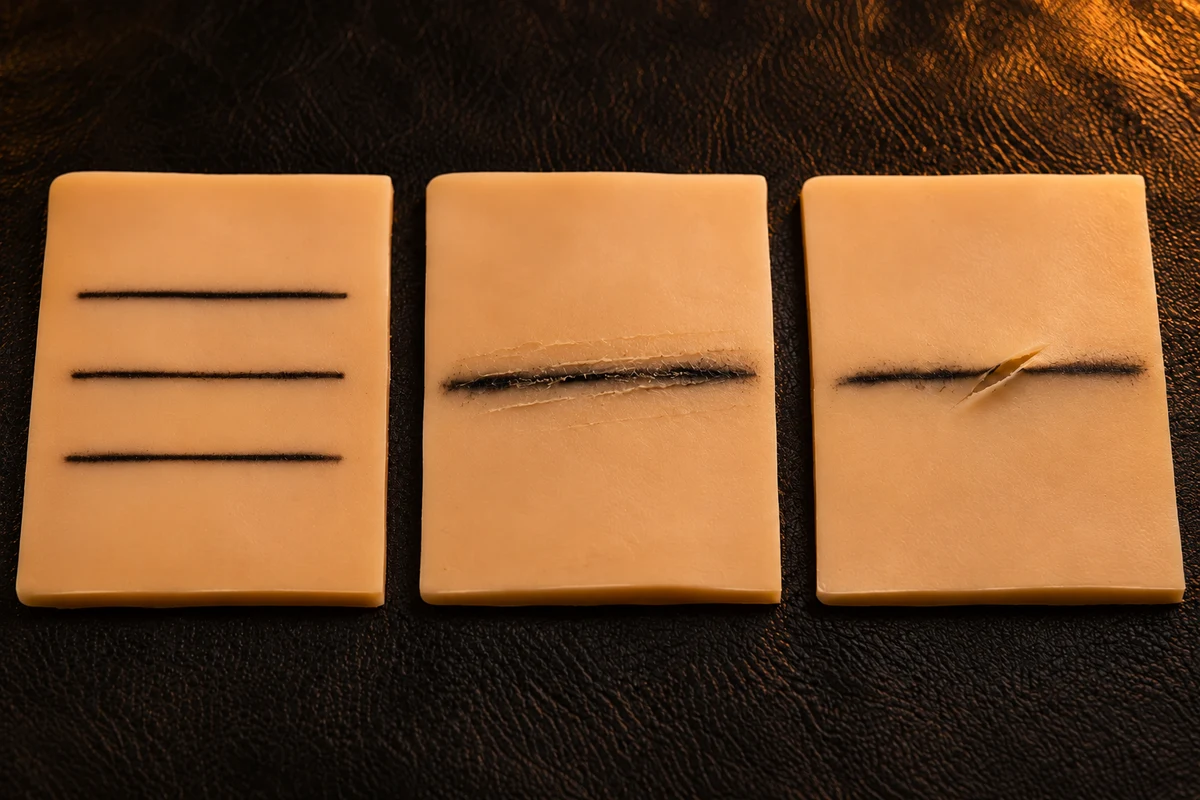
Fake skin can tear when repeated needle strikes weaken the same narrow area of material. Excessive pressure, repeated passes, a mismatch between machine speed and hand speed, an unsuitable practice sheet, or a damaged cartridge can all contribute. If your tattoo practice skin is tearing, stop working that section and compare short test lines on an unused area before changing your whole setup.
The useful question is not simply “Am I going too deep?” It is when does the damage start, and what changes it? A split that appears on the first pass needs a different check from a groove that develops after several attempts to darken a line.
Why is my fake skin tearing when I tattoo?
Start by identifying the pattern. Inspect the sheet after a gentle clean, under good light, without pulling a fresh line apart. Aggressively stretching or bending the material can enlarge a small defect and make the original damage harder to judge.
| What you notice | What to check first | A useful comparison |
|---|---|---|
| A cut appears during the first line | Pressure, penetration, cartridge condition and sheet support | A short line with a lighter hand on a fresh area |
| The line becomes a groove after several passes | Repeated work over the same path | A single-pass line beside the repeatedly worked line |
| The needle catches or drags | Cartridge tip, needle condition, working angle and material | A new cartridge of the same specification |
| Damage is worse at corners and line endings | Pausing with the needle still moving in one spot | Simple straight practice lines without corners |
| One sheet tears but another behaves differently | Thickness, material and manufacturing variation | The same exercise on a second suitable practice sheet |
| Damage becomes obvious during cleanup | Wiping pressure and repeated rubbing | Gentle dabbing rather than scrubbing |
1. Too much pressure or penetration
Pressing harder to make a faint line darker can turn a practice exercise into cutting the material. If the pen feels as though it must be forced through the sheet, pause and investigate the setup rather than adding pressure.
Keep three measurements separate: stroke is the distance the machine mechanism travels in a cycle; needle hang is how far the needle projects beyond the cartridge tip; penetration is how far it actually enters the practice material. Increasing needle hang does not automatically control penetration.
There is no single needle depth that works for every practice sheet; the material and thickness both matter. Check your machine’s instructions, and ask a mentor to assess your grip, pressure and movement.
2. Machine speed and hand speed are not working together
A moving needle repeatedly enters the material as your hand advances. If your hand slows down substantially while the machine keeps cycling, more strikes are concentrated in a shorter distance. Stopping over a corner or repeatedly correcting an endpoint can therefore damage a small area even when the rest of the line looks acceptable.
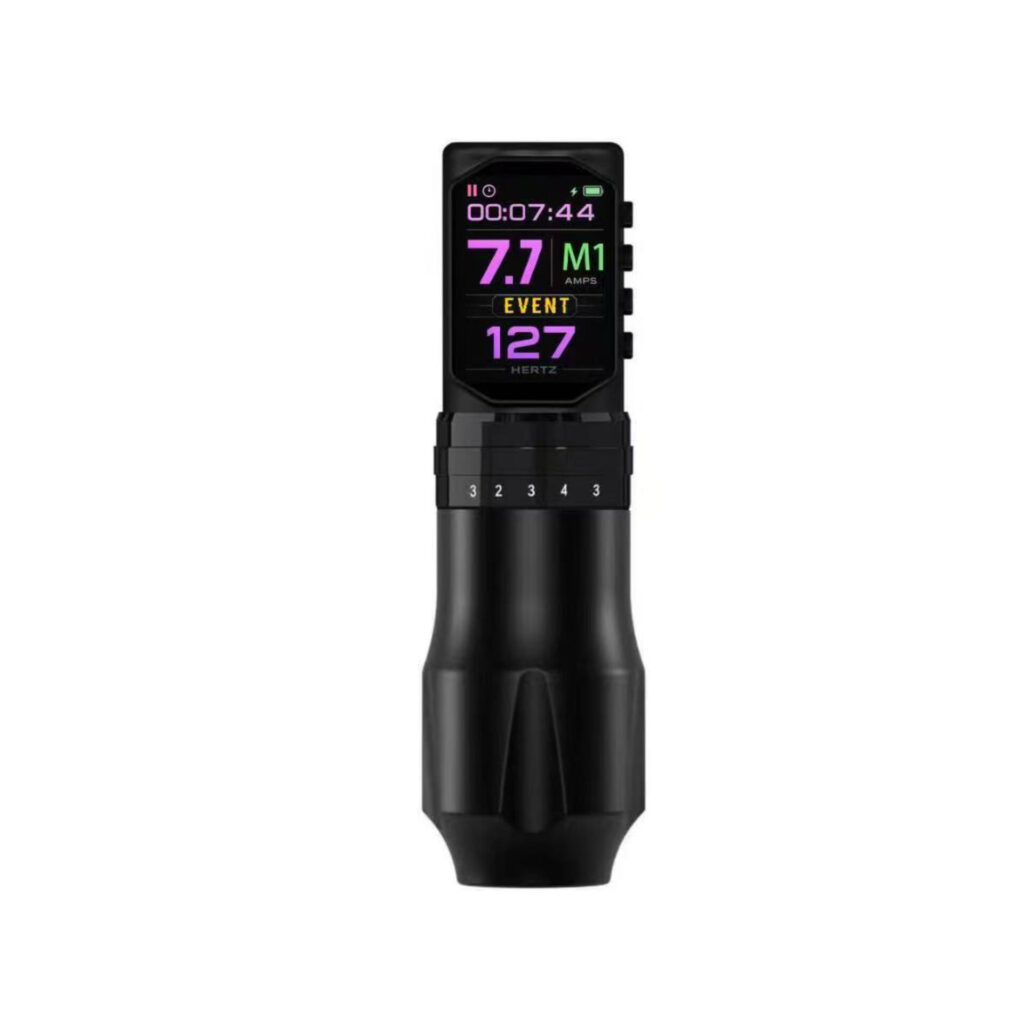
This does not mean that one voltage is correct for everyone, or that reducing voltage always solves fake skin tearing. Different motors, cartridges and operating ranges behave differently. A number copied from another artist’s machine is not a complete setup.
On a new practice strip, keep the cartridge, sheet and machine setting fixed while comparing a few short lines with controlled hand movement. Change one variable at a time and stay within the manufacturer’s operating range. If the pen stalls, cuts out or changes power unexpectedly, use our rotary tattoo pen troubleshooting guide to separate an equipment fault from a practice issue.
3. Repeated passes are weakening the practice skin
A line may look pale because of poor ink flow, the cartridge choice, surface residue or the practice material itself. Going over it again and again can hide the original cause until the surface starts splitting.
When a line remains faint, leave it as a diagnostic sample. Draw the next comparison beside it rather than continuing to work the damaged path. Record whether it was one pass or several; otherwise, the darkest line may also be the most damaged one.
Judge your practice by consistency and surface condition as well as darkness. A photograph of a saturated line alone does not tell you how it was produced.
4. The fake skin itself is affecting the result
Thin sheets provide less material between the working surface and whatever supports them. Different synthetic compounds also respond differently to puncturing, stretching and cleaning. Price or branding alone cannot establish whether the sheet suits the exercise.
Check the supplier’s thickness and usage instructions. Keep the sheet supported securely, and avoid allowing the needle to contact the table or another hard backing. Do not assume the absence of a tapping sound proves that your penetration is appropriate.
If possible, repeat the same small exercise on a second practice sheet with a documented thickness and material. If the result changes, the sheet is a variable worth investigating; it does not prove that every aspect of your technique is correct.
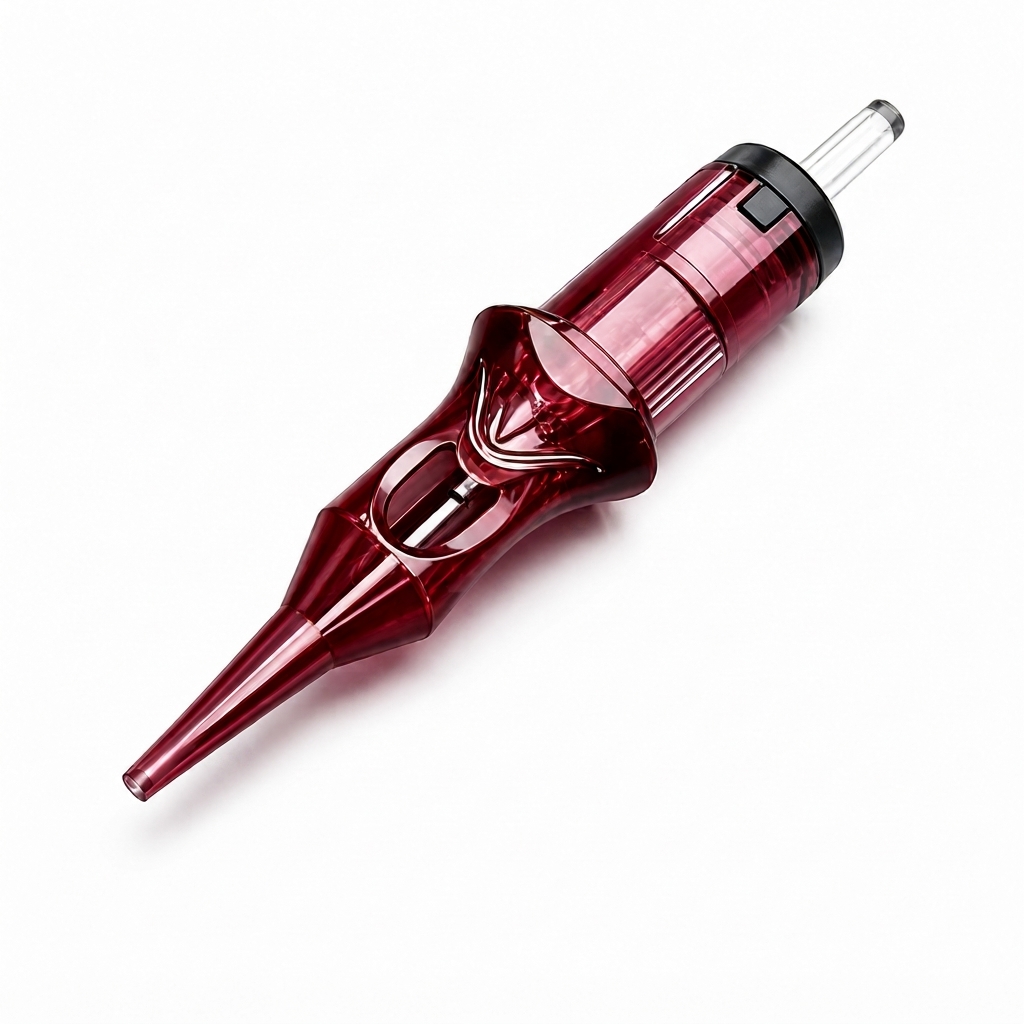
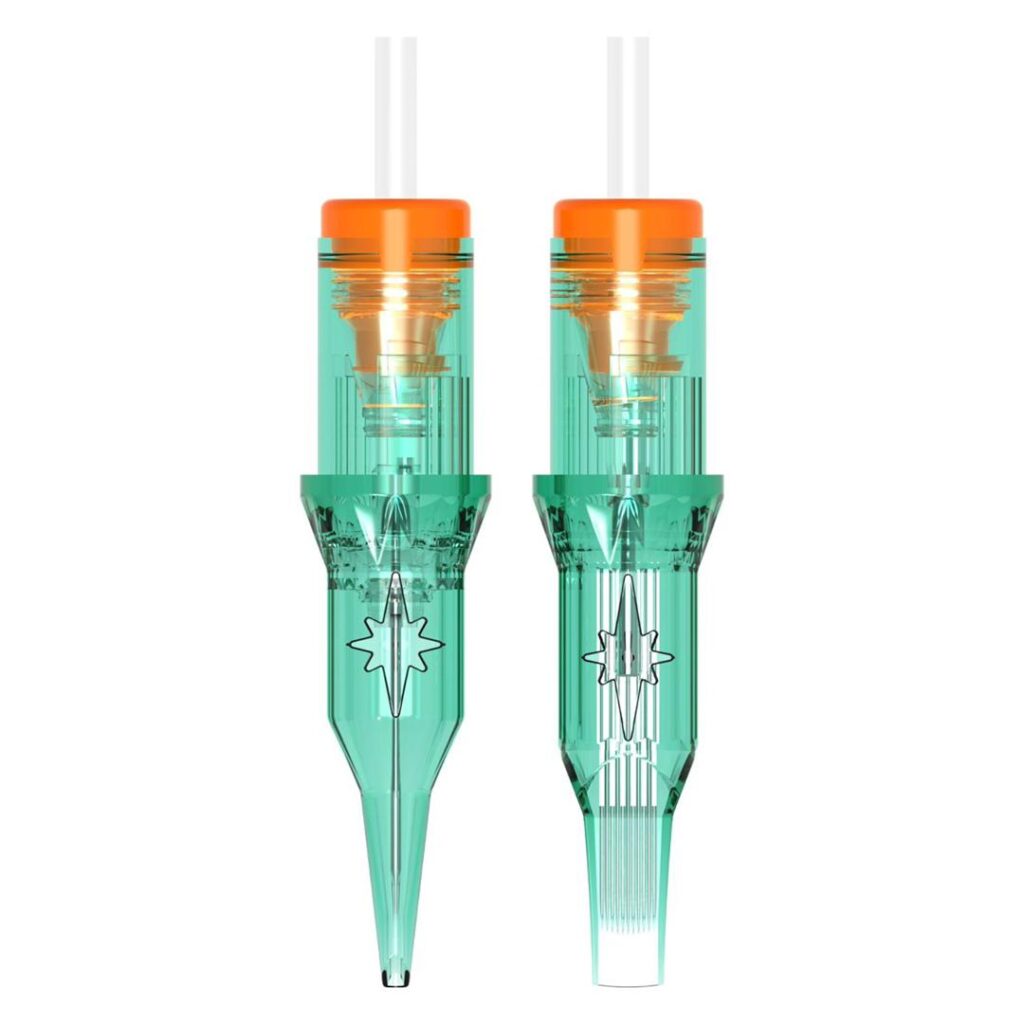
5. A damaged or unsuitable cartridge is catching
Stop if a cartridge develops unusual dragging, unstable movement or a visibly damaged tip. With the machine off, check that the cartridge is compatible and seated according to the machine instructions. Replace a suspect cartridge rather than bending, sharpening or attempting to repair its needles.
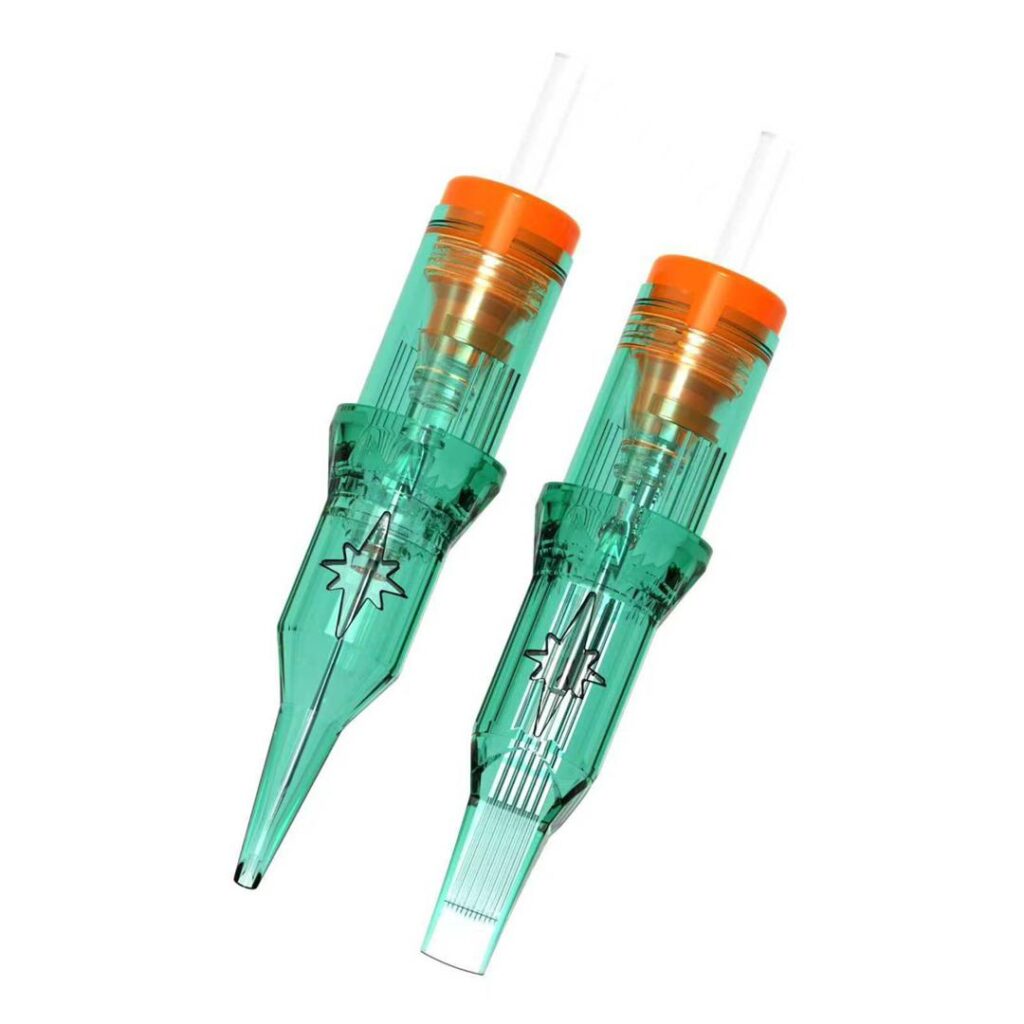
For a meaningful comparison, use a fresh cartridge with the same configuration and diameter. Changing the brand, grouping and machine settings together makes it difficult to identify what helped.
Grouping and needle diameter are separate choices. Our guide to tattoo needle cartridge configurations explains liners, shaders and magnums. Choose a cartridge appropriate to the exercise before treating every faint line as a depth problem.
6. Cleanup is adding damage
Scrubbing to remove surface ink can make an already weakened line worse. Tattooing 101’s fake skin cleaning guide recommends dabbing excess ink rather than repeatedly wiping across the sheet. It also notes that too much lubricant can obstruct ink flow.
Follow the practice skin supplier’s cleaning instructions. Use only a small amount of a compatible practice lubricant if recommended, and avoid adding unfamiliar solvents to rescue a stained sheet. Check whether a split was present before cleanup or only became visible after heavy rubbing.
What beginner discussions reveal about fake skin tearing
The uncertainty is familiar: is it the material, the machine, or the artist’s hand? In a Reddit discussion about damaged practice skin, participants suggested different explanations, including penetration, movement and sheet quality. The disagreement illustrates why a photo alone rarely establishes the cause.
Another discussion about torn fake skin and faint lines describes the frustrating tradeoff between visible damage and insufficient saturation. A separate practice-skin tearing thread shows that buying a recognised brand does not remove every difficulty.
These are individual experiences, not controlled tests or universal setting recommendations. Their practical value is the questions they raise: did the tear begin on the first pass, does another cartridge behave differently, and can the same result be reproduced on a second sheet?
A simple test routine for tattoo practice skin tearing
- Set aside the damaged section. Begin on unused material with the sheet secured and the cartridge checked.
- Make a baseline. Use one suitable cartridge and a machine setting within the manufacturer’s guidance. Draw a few short, simple lines.
- Inspect before repeating. Dab away excess ink and look for cuts, grooves, catching or uneven saturation.
- Change one variable. Compare handling first; if a cartridge seems suspect, replace it with the same specification. Test another sheet separately.
- Keep notes. Record machine model, setting, stroke, cartridge code, sheet thickness and pass count.
- Get the result reviewed. Show a mentor both the sheet and a short video of your setup and movement. That provides more information than a finished photo alone.
Before replacing your machine, check whether the problem changes with your technique, the sheet or the cartridge. A few controlled comparisons can help you identify what actually needs attention.
Frequently asked questions
Is it normal for fake skin to tear?
It can happen during practice, but repeated splitting is useful feedback to investigate. Do not assume every tear is unavoidable or that every tear proves excessive penetration. Compare the material, cartridge and way the line was worked.
Why does my fake skin tear when I bend it?
Bending can open a path already weakened by needle strikes. It makes damage easier to see but is not a reliable measurement of penetration. Inspect the sheet without repeatedly flexing the same line.
What voltage stops fake skin from tearing?
No universal voltage does. Machine response, cartridge load, hand movement and sheet properties all affect the result. Use the operating guidance for your machine and controlled practice comparisons instead of copying an isolated number.
Does thicker practice skin fix the problem?
A more suitable sheet can improve the exercise, but thickness alone will not correct a damaged cartridge, repeated passes or uncontrolled pressure. Compare sheets while keeping the other variables consistent.
Does tearing fake skin mean I would tear real skin?
Synthetic sheets and living skin respond differently. A practice tear cannot predict a client’s outcome, and a clean practice sheet does not establish readiness to tattoo a person. Keep this troubleshooting on synthetic material and develop client-work skills through supervised professional training.
The next step: preserve one damaged sample, make a short comparison on fresh material, and record what changed. Finding a repeatable cause is more useful than chasing a darker line or a higher-priced machine.