
This long-form, practical guide answers what professional artists searching “wireless rotary tattoo machine for professionals” really want: how these machines perform in the chair, what engineering matters, how cordless changes your technique, the tests you must run before buying, maintenance and battery care, troubleshooting, and three devices you can test today. If you want personal guidance or to order, message us on WhatsApp and we’ll guide you through shipping and battery rules.
Message on WhatsApp +86 134 2903 2695
•
Instagram @event.tattoochina
Why this guide matters
“Wireless” or “cordless” is more than a marketing label — it adds battery management to your toolkit. That can be transformational (less cable drag, easier positioning, cleaner workflow) or a headache (sagging power, heat, or poor ergonomics) depending on the machine. This guide is written from the seat of experience: practical tests, technical priorities, technique adjustments, and real-world buying flow for professionals.
The content is structured to be useful whether you scan for a checklist or read deeply: technical pillars, in-chair testing routine, technique and voltage guidelines, maintenance and battery care, troubleshooting, product features and buying workflow — and a final checklist you can print or save.
Technical pillars — what actually defines performance
1 — Motor stability and torque
The motor is the heart of the machine. A high-quality motor (brushless or a precision high-grade brushed motor) maintains rotational speed and torque when the needle meets resistance. What matters most in practice is how the motor behaves under load: does it maintain steady RPM, or does it slow and stutter? Steady torque gives consistent penetration and uniform ink deposition; inconsistent torque gives patchy shading and unreliable packing.
2 — Battery & power delivery
mAh numbers are one indicator, but battery chemistry, cell quality and the battery management system (BMS) matter more. A battery with a stable discharge profile and a BMS that avoids voltage sag will perform far better than a larger-capacity pack with poor cells. For professionals, hot-swap capability or carrying spares is recommended for longer sessions.
3 — Stroke and RPM behavior
Stroke length (how far the needle moves) and RPM combine to define needle feel. A mid-range stroke (~3.0–3.8 mm) is versatile; short strokes favour fine lines, longer strokes favour punch and packing. Importantly: high top RPM ratings are meaningless if the device cannot sustain that RPM under real load.
4 — Ergonomics & heat management
Balance matters more than absolute weight. A balanced 240 g pen can feel better than an unbalanced 200 g pen. Heat transfer into the grip after sustained use affects comfort and concentration; prefer designs with good thermal paths or spaced duty cycles.
Motor checks — what to do when testing
- Listen to the motor — it should sound smooth, not gritty.
- Run it against practice skin and press with light-to-moderate force — watch for RPM drop.
- Check at different angles — the motor should remain steady across positions.
If the motor sags or stutters under modest pressure, that device will struggle on real clients.
In-chair testing checklist — exact routine to follow
Use this checklist when you can demo in-person or test at a convention table. These steps reveal most real-world issues.
- Run the machine at your typical shading voltage for 5–10 minutes on practice skin — observe RPM stability.
- Press into skin with light and then moderate pressure — look for sag, stutter, or uneven stroke.
- Run a continuous 20–30 minute session to check heat build-up and battery behaviour.
- Switch to your lining voltage and test needle return and crispness.
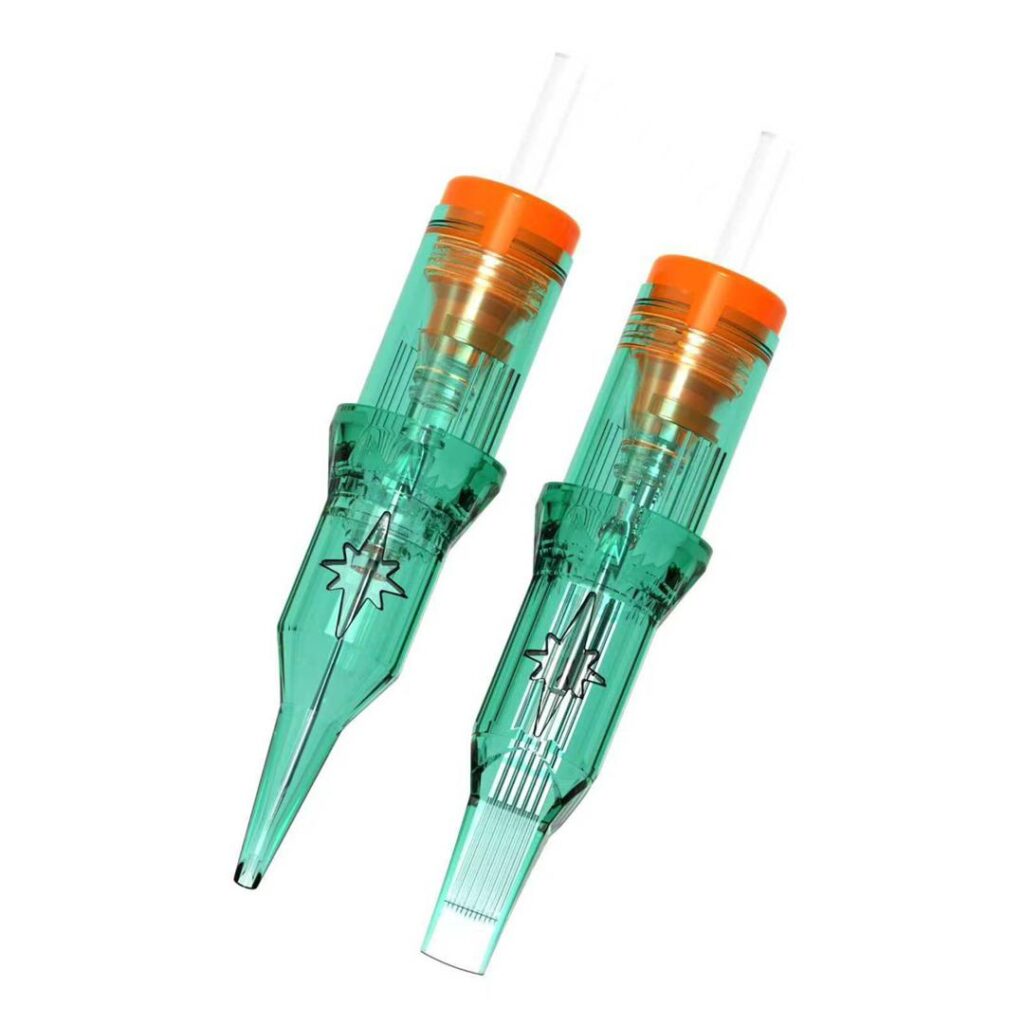
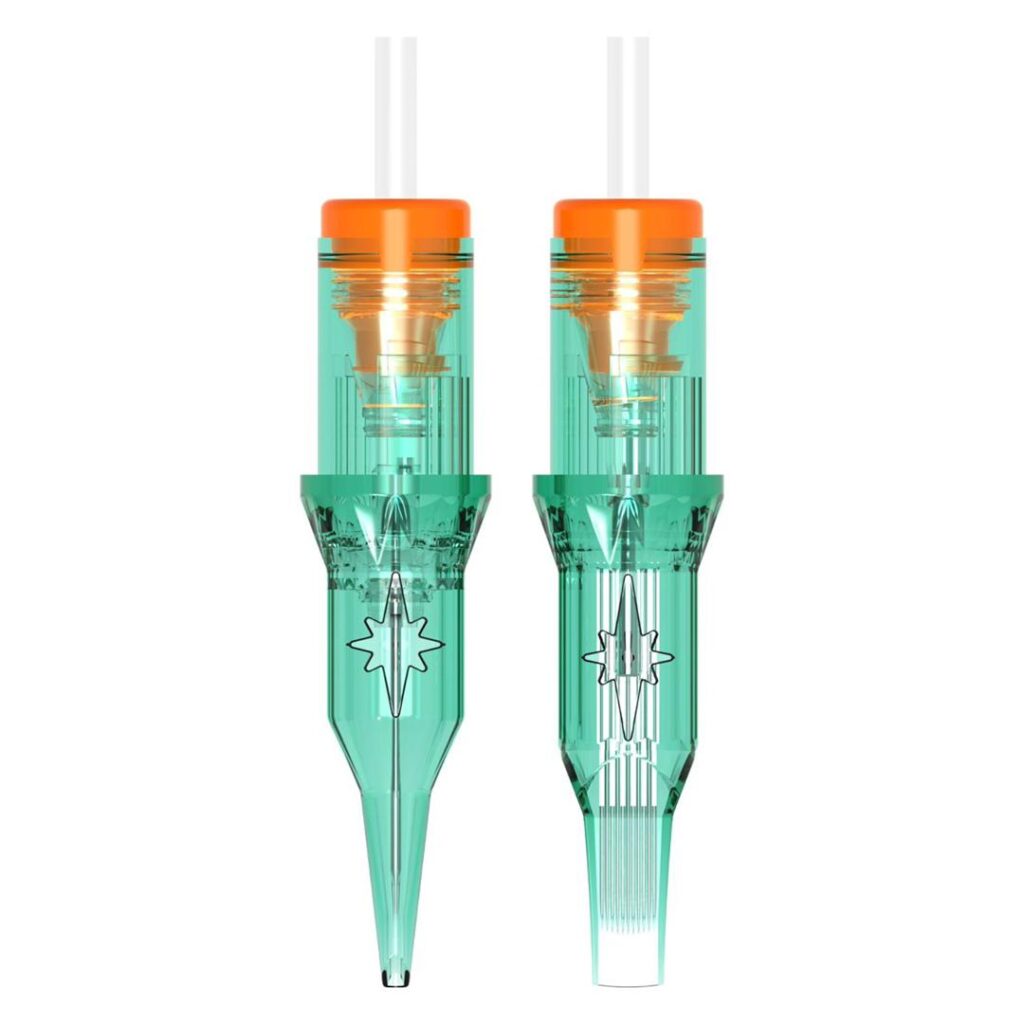
- Insert and remove cartridges multiple times — confirm consistent seating and no wobble.
- If hot-swap is supported, swap batteries mid-session to confirm minimal interruption.
If a machine fails any of these steps, it’s likely to cause trouble in real work. These are not optional — they’re practical quality gates.
Stroke & RPM — practical reference table
| Stroke | Best for | Notes |
|---|---|---|
| ~3.0 mm | Fine lines, delicate shading | Precise control, low trauma |
| ~3.5 mm | All-round | Versatile for most artists |
| ~4.0 mm | Bold lining, packing | More punch; requires skill |
|
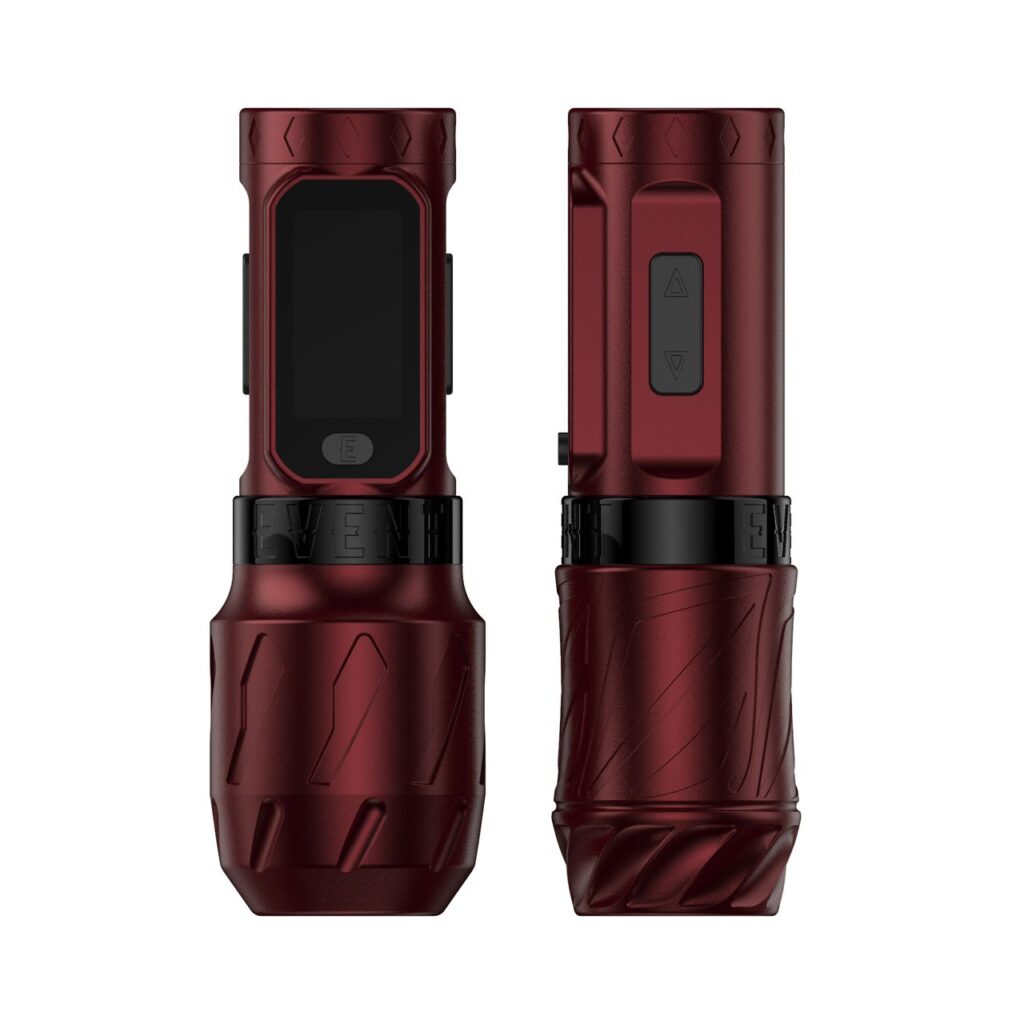
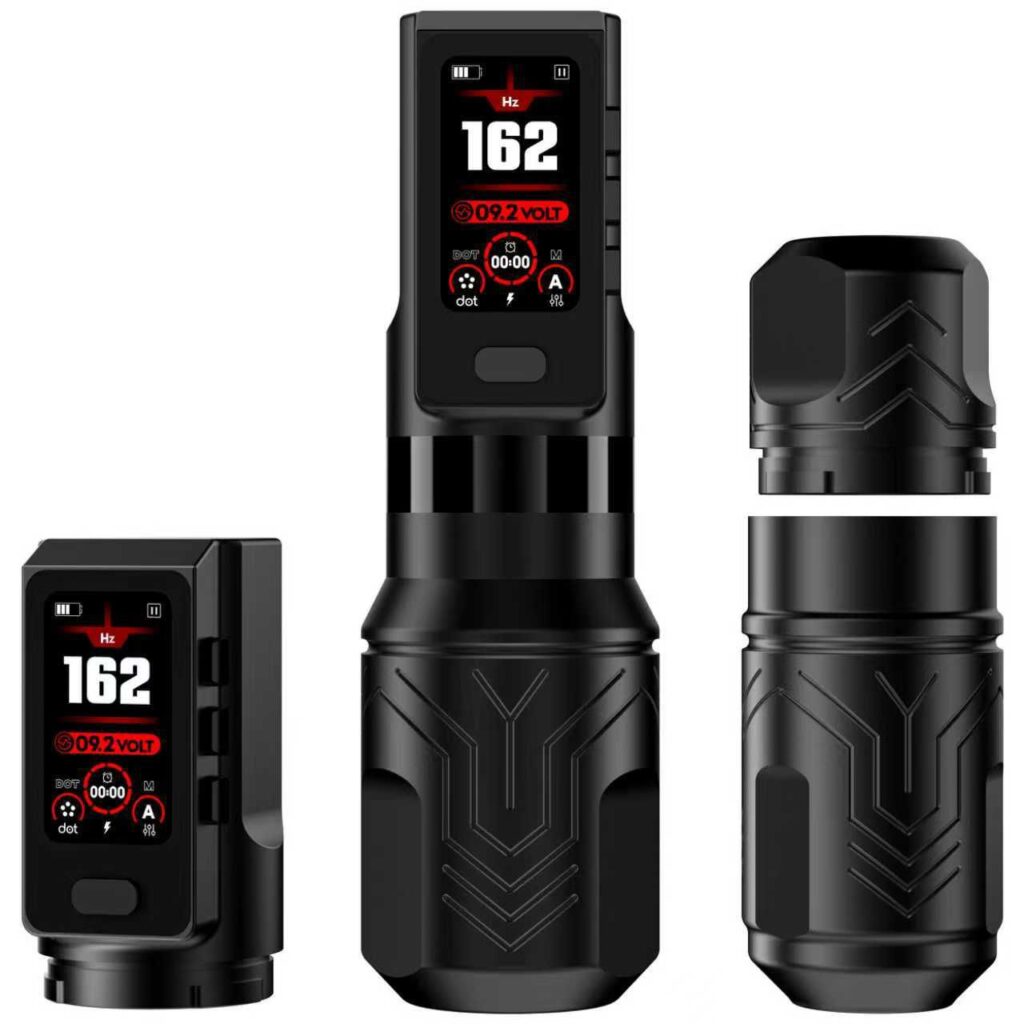
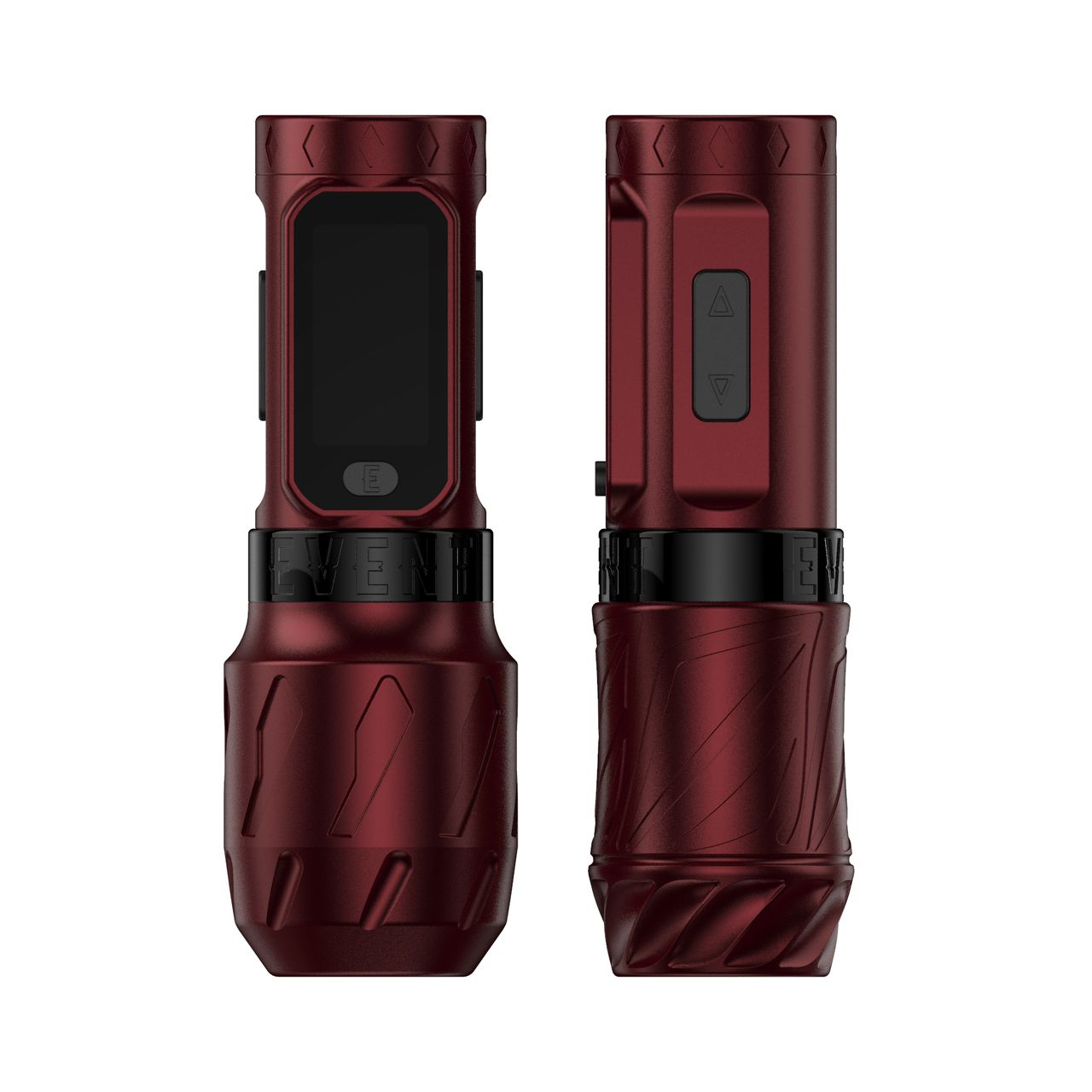
Event TST — click image to view product.
|
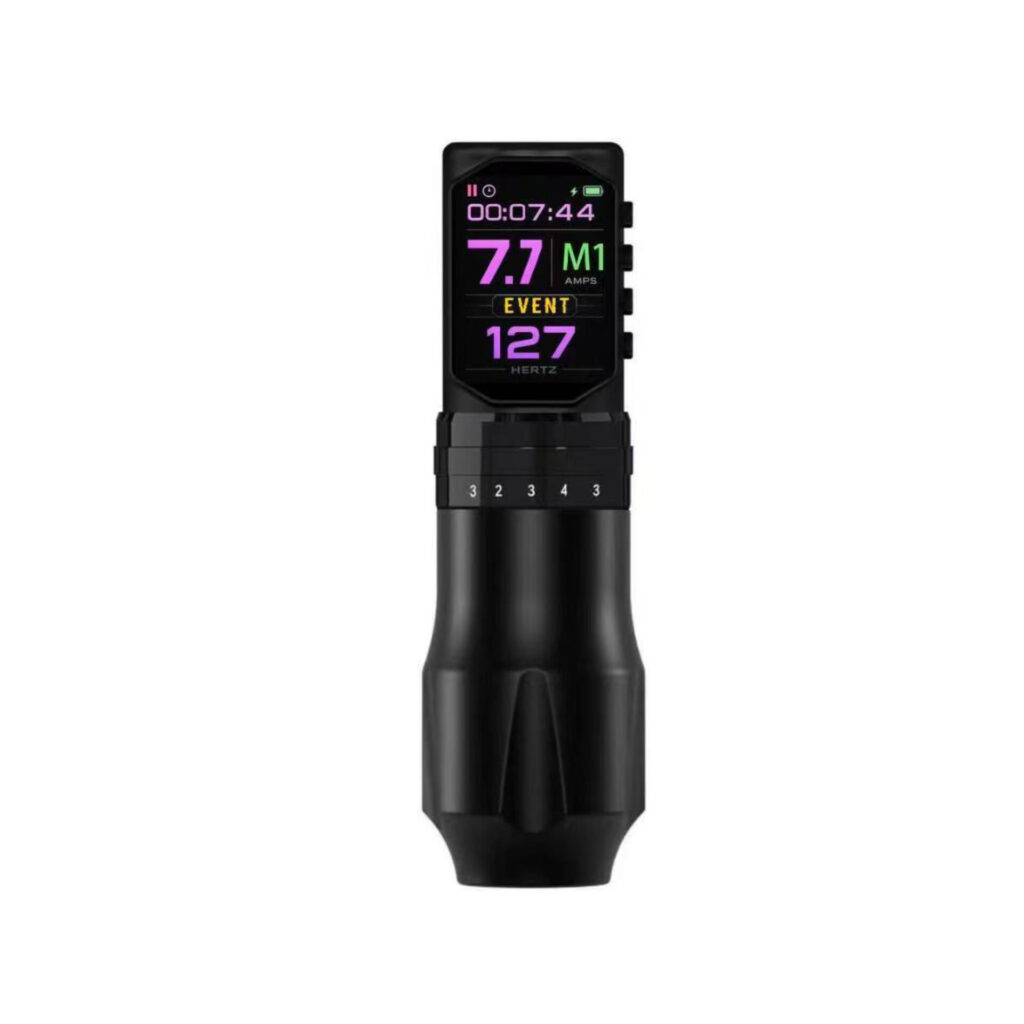
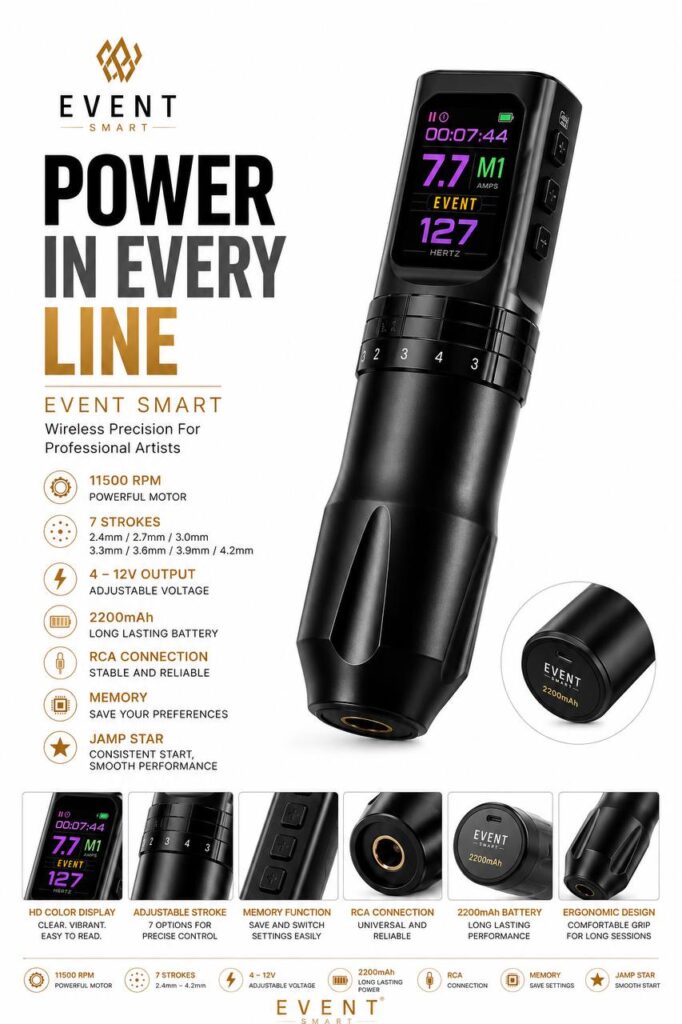
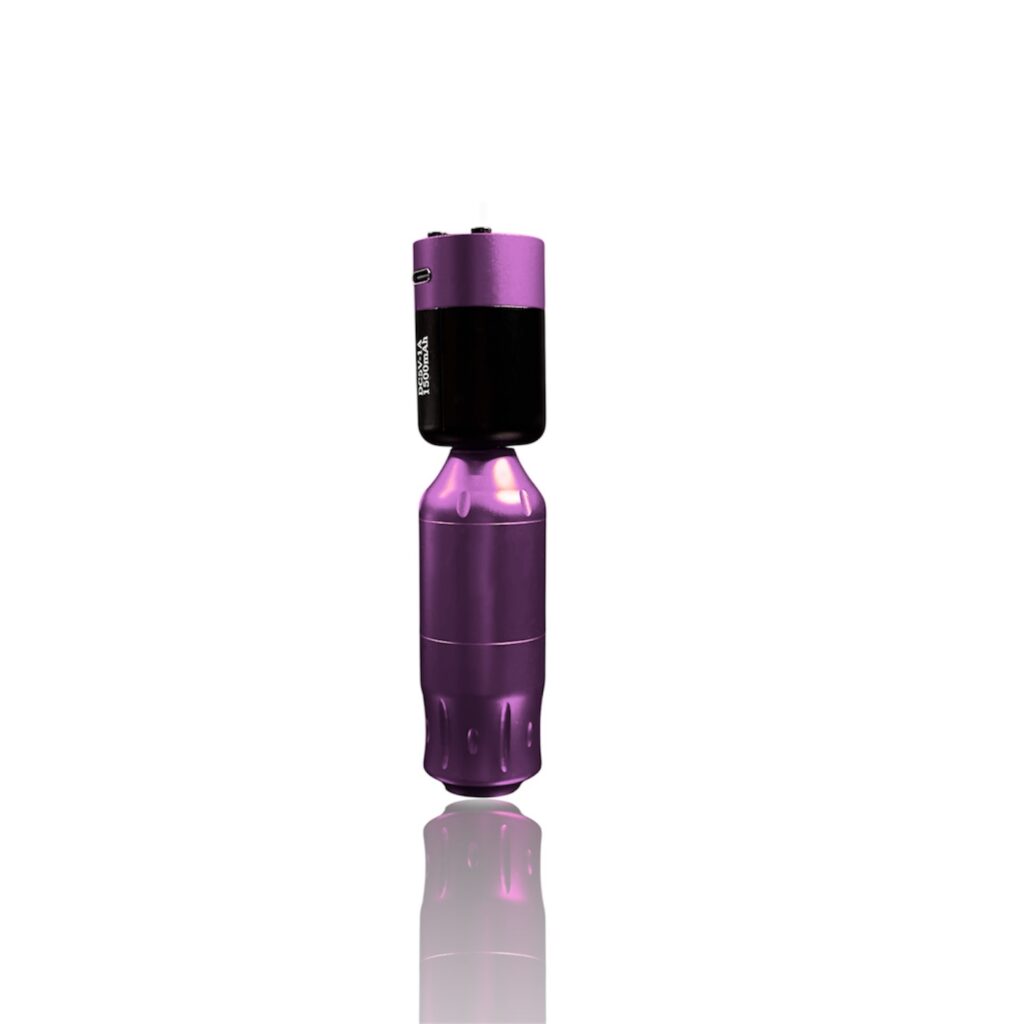
Event TST — professional wireless rotary (featured)The Event TST is one of the models we feature for professionals looking for a reliable wireless rotary. Because product specifications can change and because each artist’s feel and workflow differ, the most useful detail is how the TST behaves in your hand and under load. Test the motor’s torque retention in a practice run and check the battery management carefully (hot-swap or runtime). We recommend professionals check the TST for: consistent needle return, limited heat transfer to the grip during a 20–30 minute run, and cartridge seating stability. If you want a guided test or to order, message us on WhatsApp so we can confirm stock and shipping. For pricing and shipping details we handle orders through WhatsApp to confirm battery shipping regulations and available payment methods. |
How wireless changes shading and lining technique
Removing cable drag changes micro-feedback — the tiny resistance you feel when the cable catches or pulls. Without that, many artists unconsciously smooth out micro-corrections and gain a slightly more fluid hand when shading. The result is often smoother gradients with less micro-vibration. For lining, cordless machines that hold steady kick feel very similar to wired rigs — the important part is steady needle return and consistent penetration, which is a function of motor and stroke behavior.
Technique adjustments worth trying when you switch to wireless:
- Try slightly larger circular motions for soft blends — cordless pens often make these smoother.
- When whip shading, focus on rhythm rather than speed — stable torque gives reliable texture.
- For lining, check your needle angle and maintain steady hand speed — cordless should not introduce wobble.
|
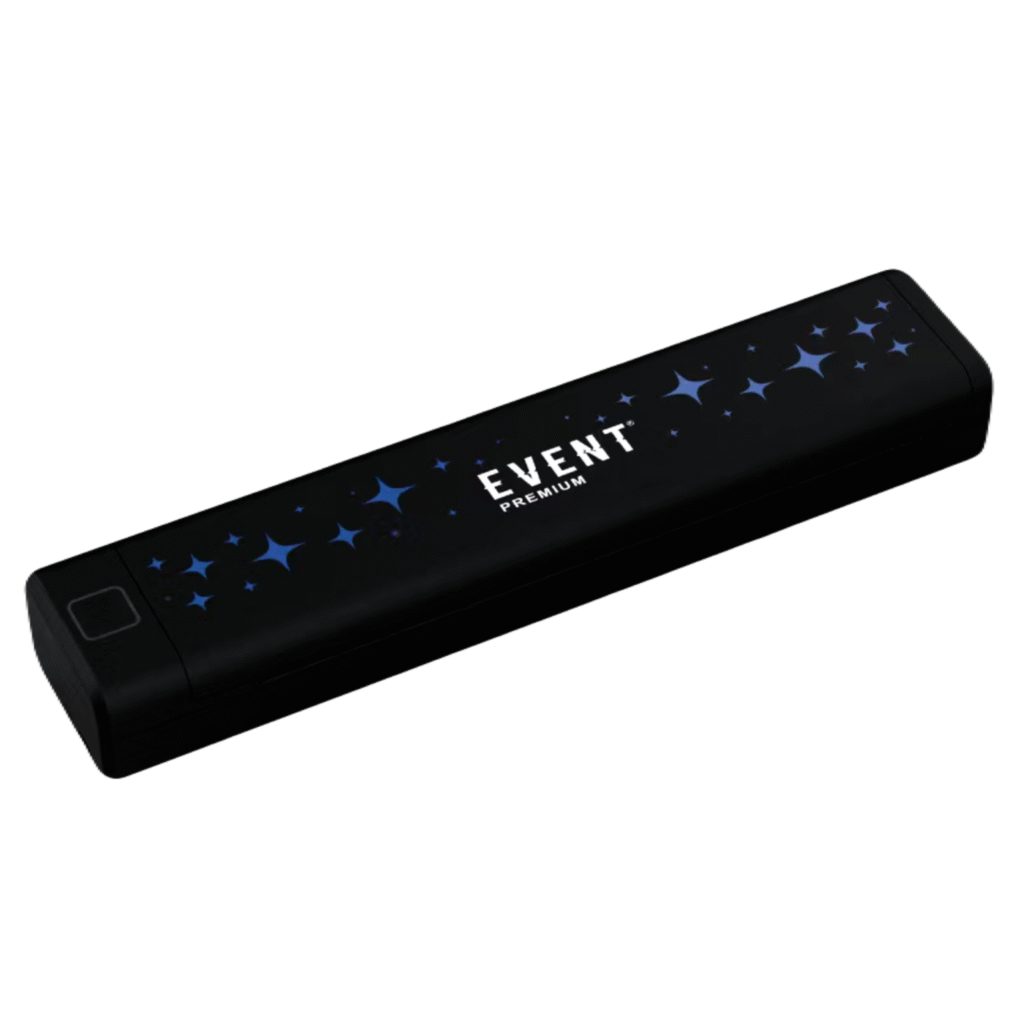
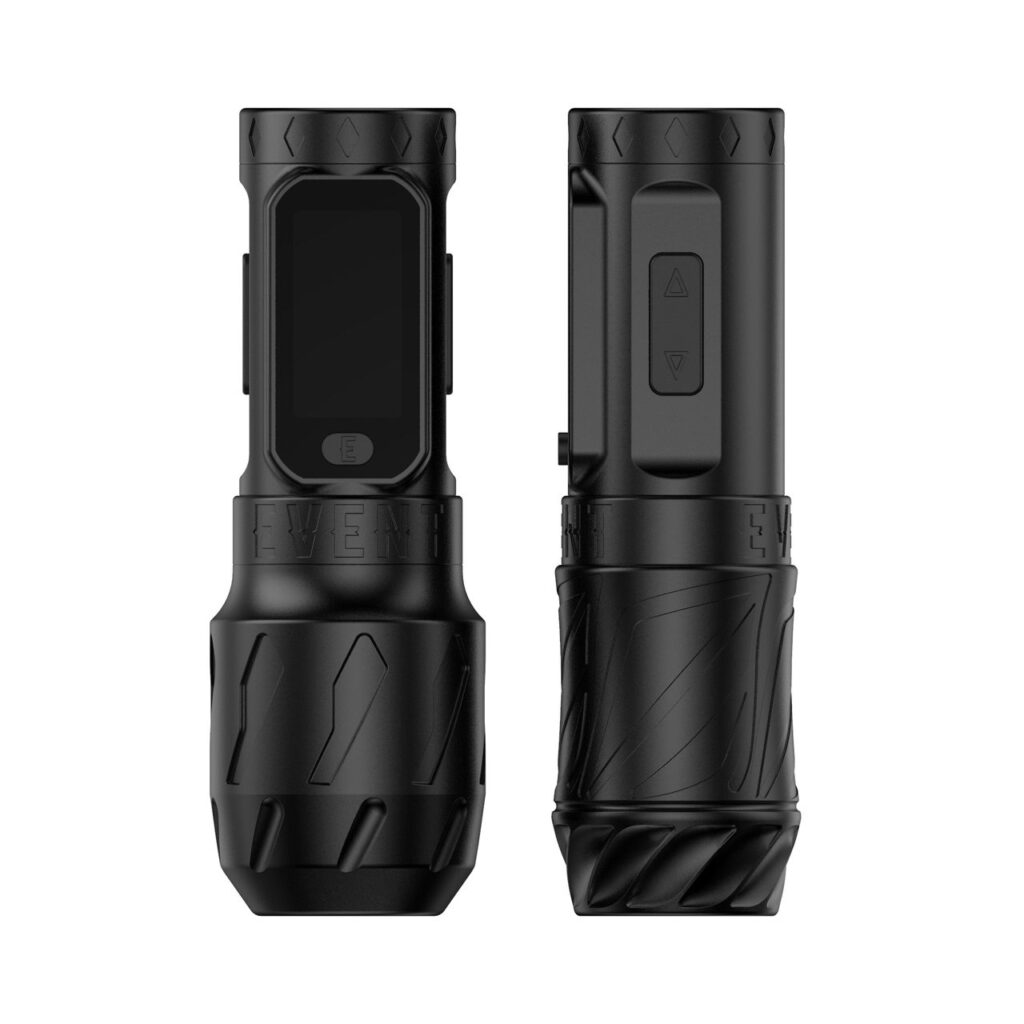
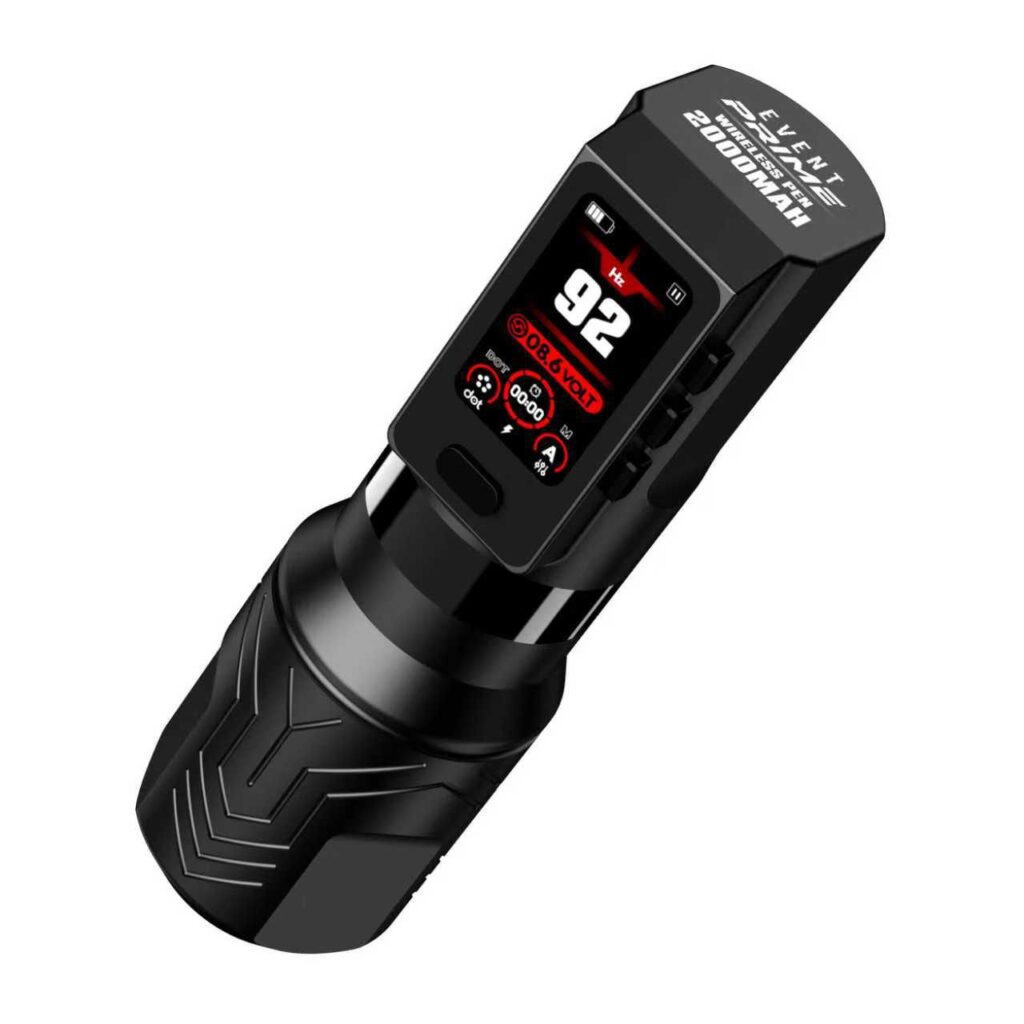
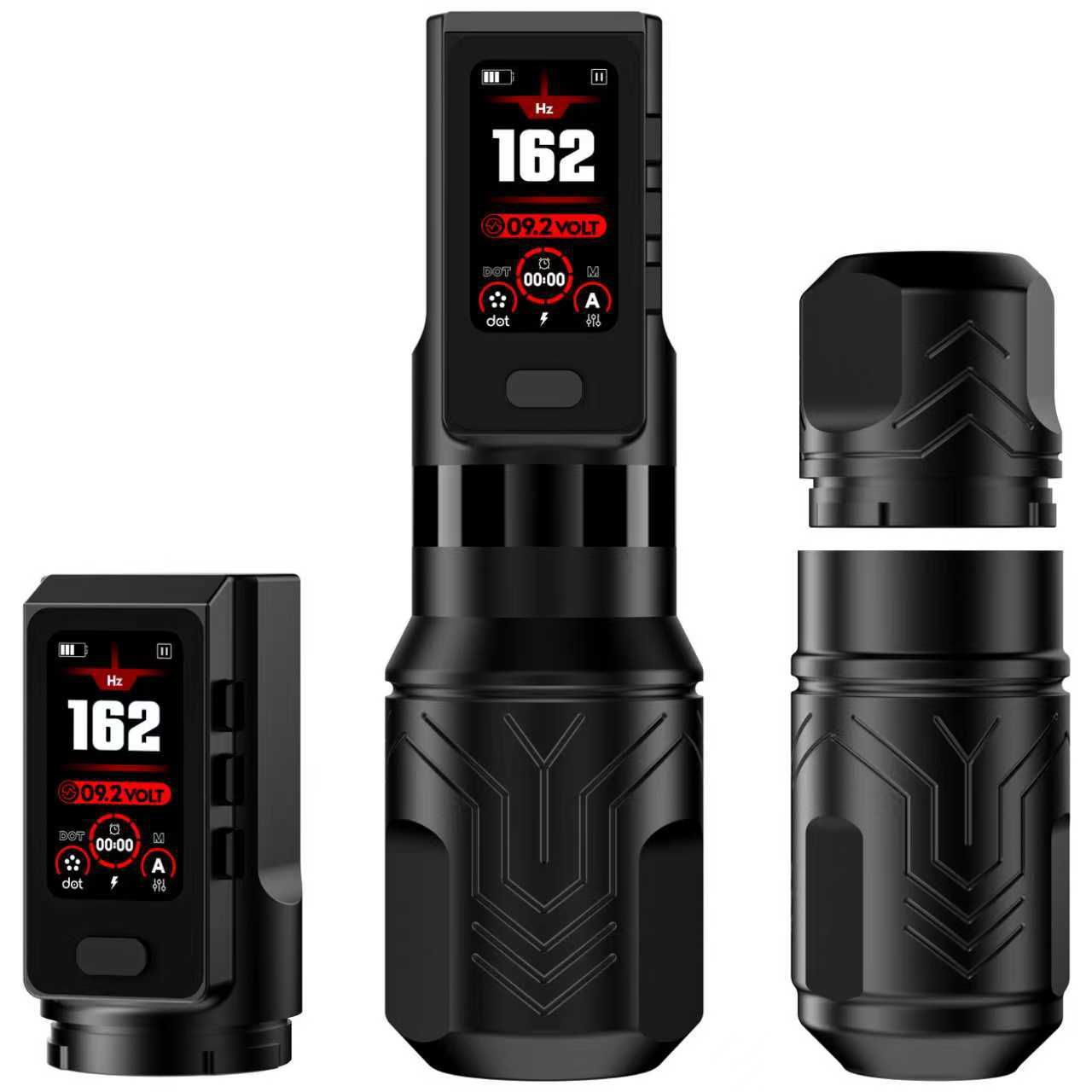
Event PRIME — device with tools.
|
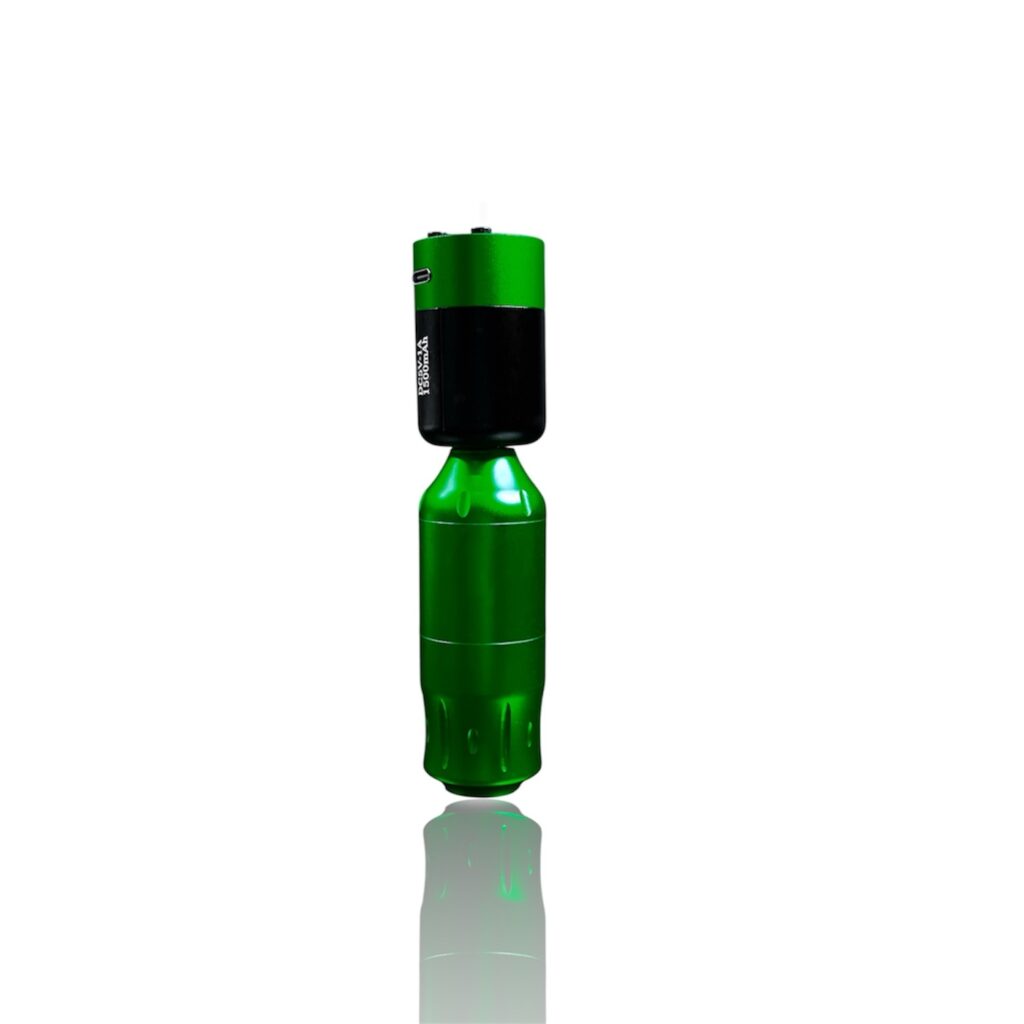
Event PRIME — wireless tattoo pen (featured)The Event PRIME is a wireless tattoo pen designed for professional artists seeking a balance of power, comfort and reliability. It is engineered with attention to motor stability, multiple stroke options, and a dual-battery workflow so shading sessions remain consistent. The device is especially popular with artists who perform long black & grey sessions or who switch frequently between shading and packing. Instead of repeating a specs table here, we recommend checking the product page for exact technical details and to confirm current pricing. When unsure, book a short guided demo with us via WhatsApp so we can confirm your intended needles, skin types, and session length. If you need the technical breakdown (stroke options, RPM, battery capacity etc.) we’ll confirm on the product page and provide tailored voltage recommendations for your needles. |
Battery handling & safe shipping notes (professionals)
Batteries require more attention than other accessories. For routine use: avoid deep discharges, charge with the manufacturer’s charger, store at moderate state-of-charge (around 40–60% if storing long term), and rotate spares to avoid cell imbalance. If shipping internationally, lithium battery shipping rules vary by carrier and destination — we confirm these details when you order to avoid delays.
Practical battery checklist:
- Always start sessions with a full charge.
- Carry at least one spare battery for sessions longer than 3 hours.
- Use recommended chargers and avoid unknown fast chargers.
- Replace batteries that swell, get hot quickly, or lose capacity rapidly.
|
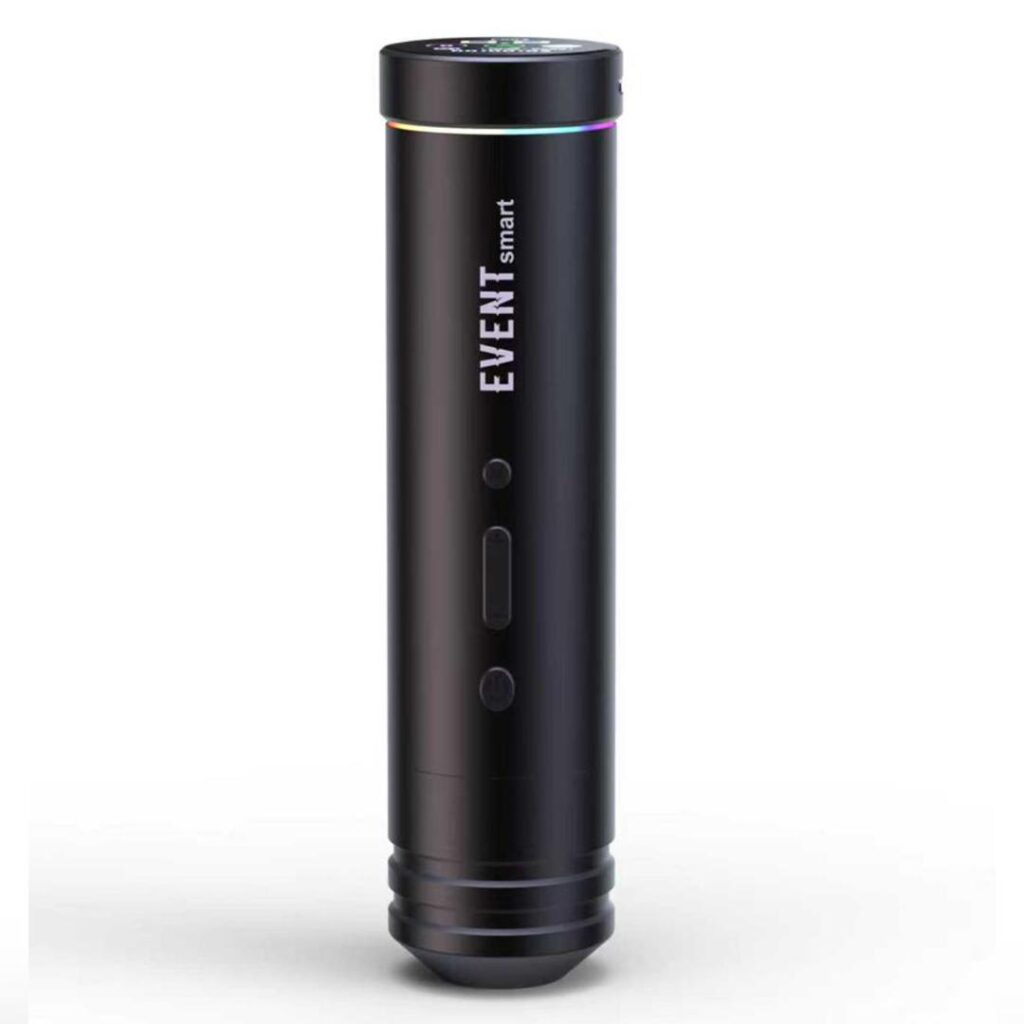
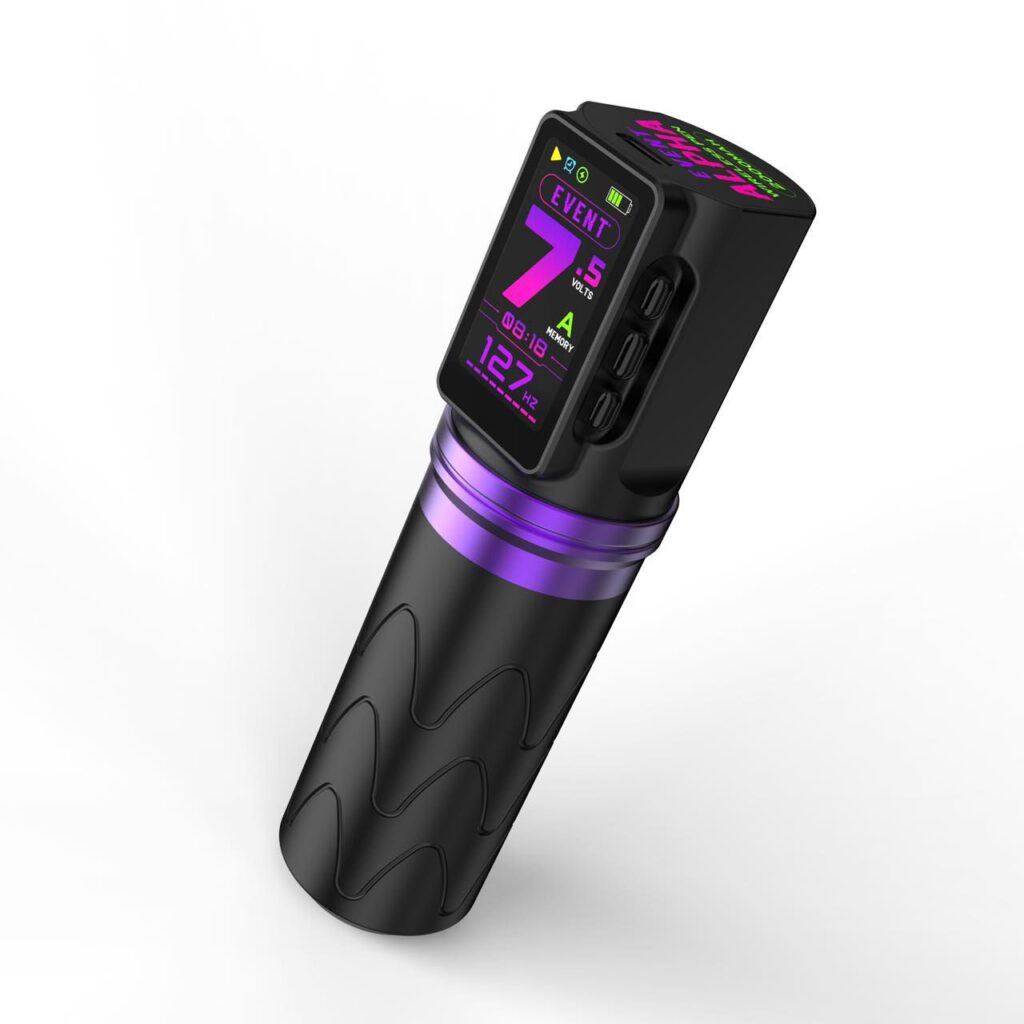
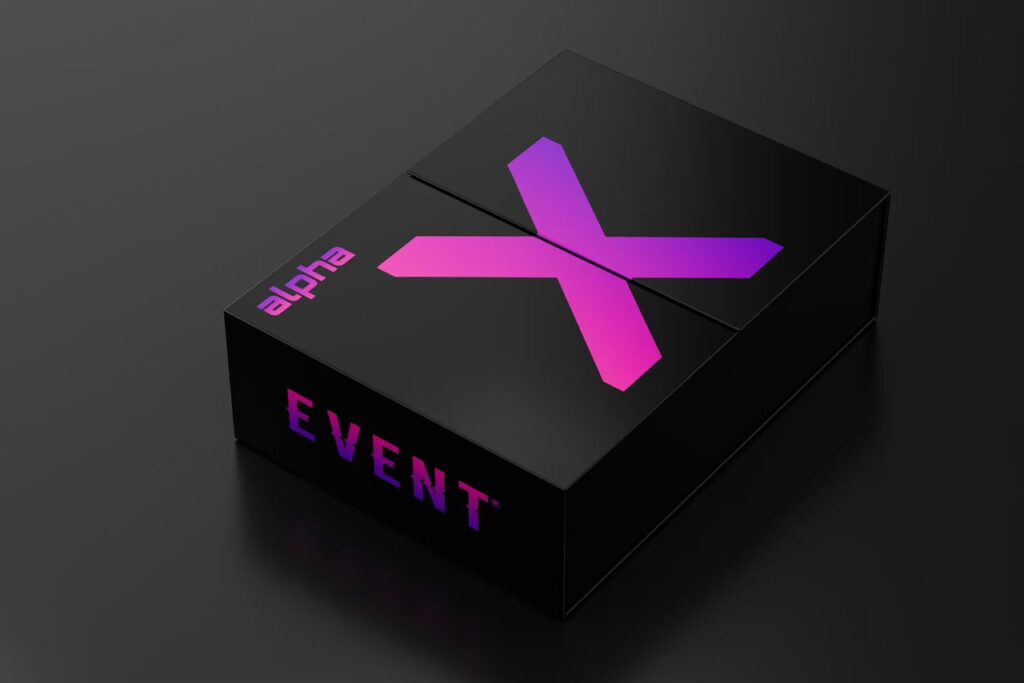
Event ALPHAX — click image to view product.
|
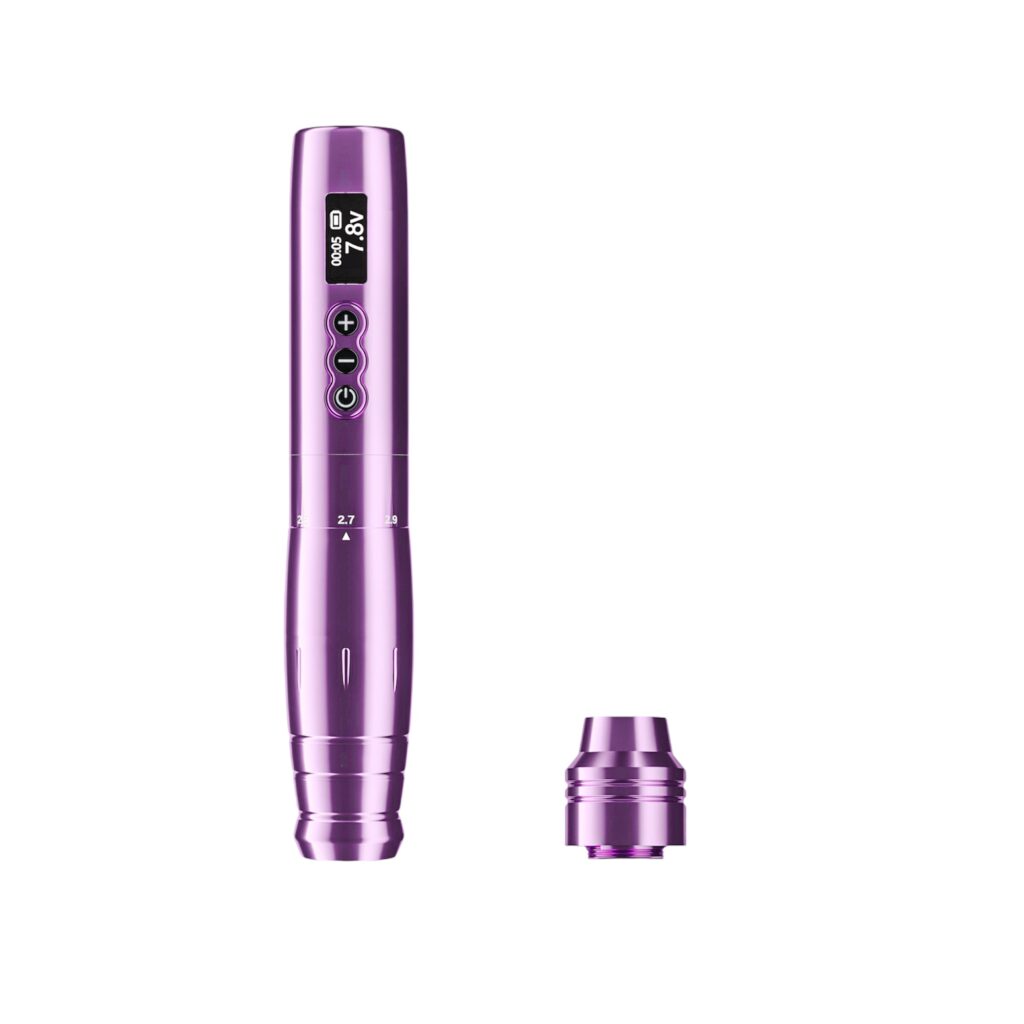
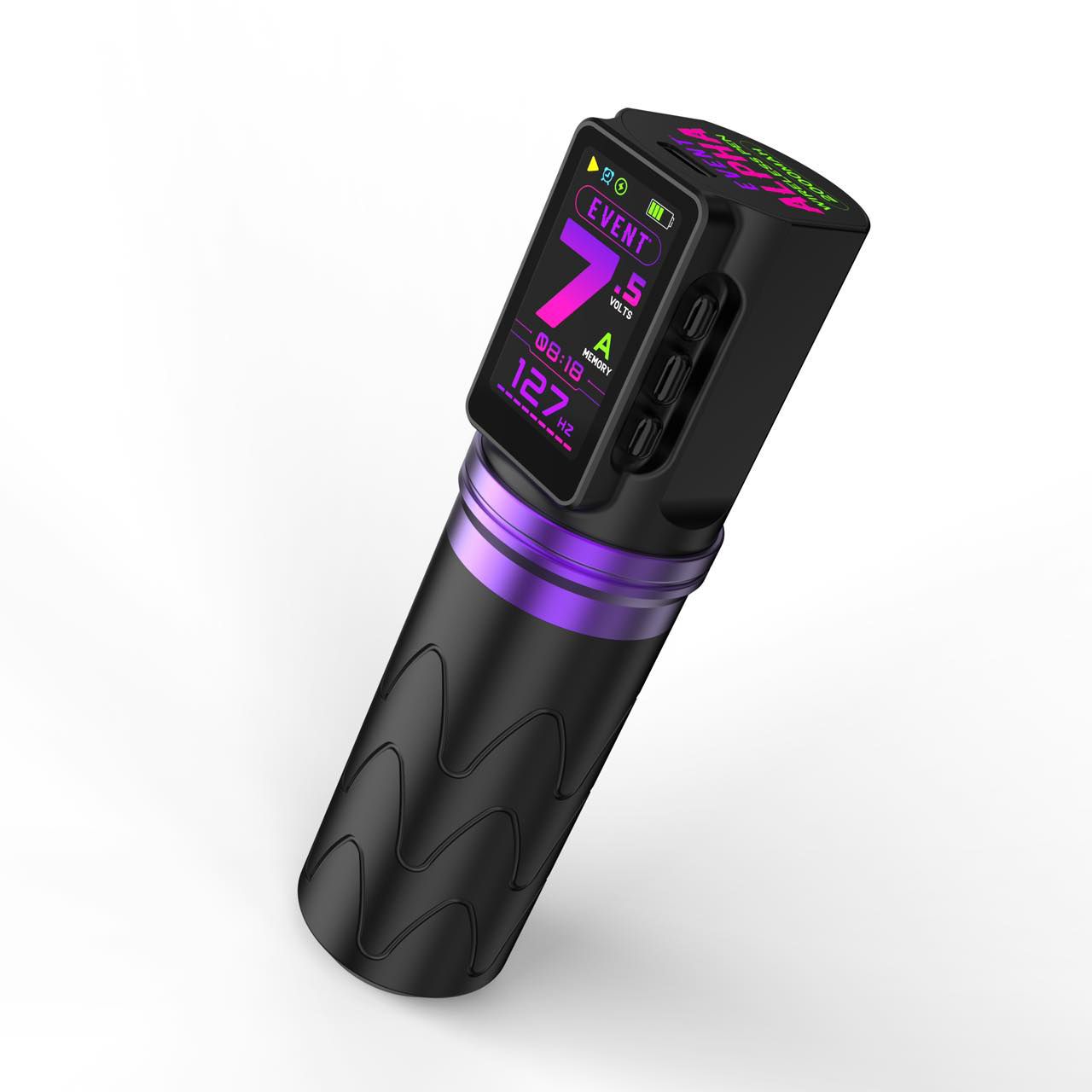
Event ALPHAX — ergonomic wireless option (featured)The Event ALPHAX emphasises ergonomic comfort and steady motor behavior for artists who prioritize grip comfort during long sessions. Like the other devices listed, the ALPHAX should be tested in the chair to verify heat behavior, torque retention, and cartridge fit. We can help choose cartridges and recommend voltages once we know your needle preferences — message via WhatsApp for a tailored workflow. |
How to choose between machines — practical lens
When comparing machines focus less on glossy specs and more on these practical points: torque under load, thermal behavior on sustained runs, cartridge seating stability, and battery management. If two machines have similar bench numbers, the one that maintains RPM in the chair and stays comfortable wins.
Buying flow we recommend:
- Test in person if possible using the in-chair checklist.
- Ask for a short demo video showing a 20–30 minute shading run if in-person demo is impossible.
- Confirm battery shipping rules and charger type with the seller.
- Order via WhatsApp so we can confirm stock, shipping, and warranty details together.
To see more models we stock (many configurations and colourways), visit: https://event-tattoo.com/product-category/devices/
Maintenance, hygiene & troubleshooting
Maintain your machine like any professional instrument: wipe external surfaces (avoid liquid ingress), keep cartridge seating areas clean, and follow battery recommendations. Don’t ignore irregular noises, sudden heat increases, or battery swelling — those are signals to service or replace parts.
- Wipe exteriors with approved disinfectant wipes; avoid liquids near seams.
- Check cartridge seating and O-rings; replace worn parts promptly.
- If you experience power sag, swap batteries and clean posts; persistent sag means battery or BMS failure.
- For vibration/wobble: reseat cartridge, tighten connections, inspect the driver; if unresolved, consult support.
FAQ — short clear answers professionals look for
Q: Are wireless rotary machines suitable for professional full-day work?
A: Yes — when chosen carefully. Quality motors and reliable battery management make many wireless machines suitable for full-day studio schedules. Hot-swap support or spare batteries are recommended for marathon days.
Q: How many spares should I carry?
A: For sessions under 3–4 hours, one spare per pen is usually enough. For marathon sessions (6+ hours), carry at least one spare per battery in use or two spares for comfort.
Q: Are cartridges compatible?
A: Most pen-style wireless machines accept universal cartridges — confirm compatibility on the product page. Always test seating repeatedly in a demo.
Q: How do I order?
A: We handle orders via WhatsApp to confirm shipping, battery rules, and payment methods. Click any “Order via WhatsApp” button above or message: WhatsApp +86 134 2903 2695.
Final checklist before you buy
- Does the motor hold RPM under moderate pressure?
- Does the machine stay comfortable (no excessive heat) during a 20–30 minute run?
- Does the battery maintain voltage at your working voltages?
- Do cartridges seat securely without wobble?
- Are shipping & battery rules clear from the seller?
If you want a tailored recommendation (style, session length, needles), message us and we’ll suggest the best model and settings for your workflow: WhatsApp +86 134 2903 2695.
Follow us for demos and new products: Instagram @event.tattoochina
Browse full device catalog: Event Tattoo — Devices
Event Tattoo — professional devices and global shipping.