
Cordless Rotary Tattoo Pen — The Practical Expert’s Guide
This long-form, practical guide answers what artists searching “cordless rotary tattoo gun” really want: how these pens perform in the chair, what technical traits matter, how to test them, and which devices you can try. If you want direct help, message us on WhatsApp for personalized guidance.
Message us on WhatsApp +86 134 2903 2695
•
Instagram @event.tattoochina
Use this as a reference and a shopping checklist. Jump to sections by scanning headings: Technical pillars, In-chair testing, Practical settings, Products to try, Maintenance & troubleshooting, FAQ, Final checklist.
What is a cordless rotary tattoo pen?
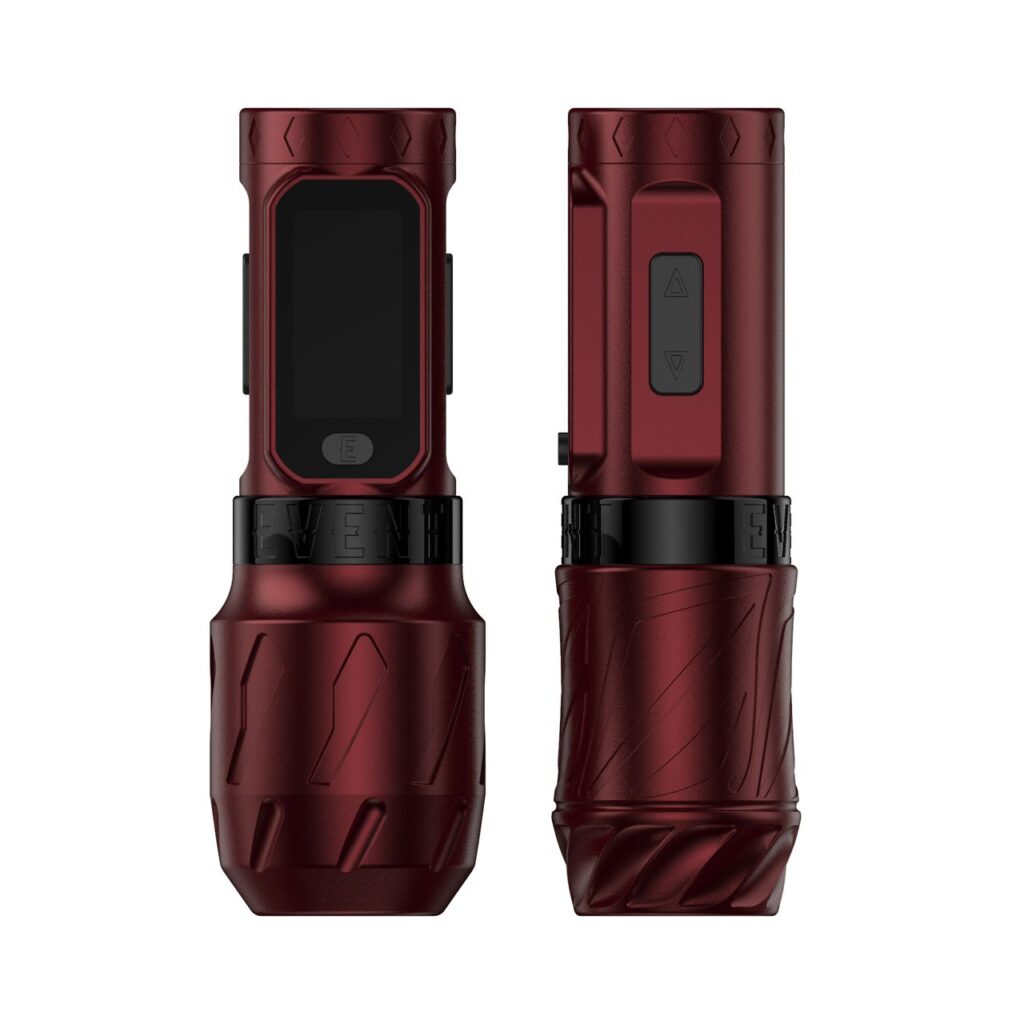
A cordless rotary tattoo gun is a pen-style tattoo device powered by an internal or removable battery instead of a cable-connected power supply. Mechanically, it works like other rotaries (rotational motor driving linear needle motion), but the battery element affects runtime, voltage stability and heat management. Removing the cord removes drag — that changes how your hand moves and can improve comfort and consistency if the device’s engineering is solid.
How to read this guide (practical lens)
I wrote this from the artist’s point of view: what to test in the chair, what specs actually mean, common failure modes, and simple technique notes. Ignore marketing claims; focus on motor stability under load, battery performance in real use, ergonomics, and how cartridges seat.
Technical pillars — what determines real performance
Motor quality & torque
A premium motor (brushless or high-quality precision brushed) maintains RPM and torque under load. That stability translates to consistent penetration, smoother shading and more predictable color packing. Cheaper motors may sound fast but sag under pressure — avoid devices that slow noticeably when pressed into practice skin.
Battery & power delivery
Don’t treat mAh as the only metric. Cell quality and the battery management system (BMS) matter more. A well-designed system will keep voltage stable under load and allow predictable runtime. For studio work, prefer hot-swappable batteries or at least carry a spare per pen for longer sessions.
Stroke & RPM behavior
Stroke length (how far the needle travels) and RPM jointly define needle behavior. Mid-range strokes (~3.0–3.8 mm) are versatile. High top-end RPMs are worthless if a device cannot sustain them under pressure; sustained RPM under load is the meaningful metric.
Ergonomics & thermal design
Balance and grip diameter matter more than sheer lightness. A balanced pen reduces wrist corrections during long arcs. Heat is often the hidden problem: a pen that gets hot in the grip after 20 minutes will change your pacing and comfort.
Motor checks — what to do in-person
- Listen: motors should have a clean tone (no grinding).
- Pressure test: run the pen and press into practice skin — note RPM drop or stutter.
- Angle test: hold the pen at various angles — motor should remain steady.
If a pen slows noticeably under light pressure, it will struggle on real skin.
|
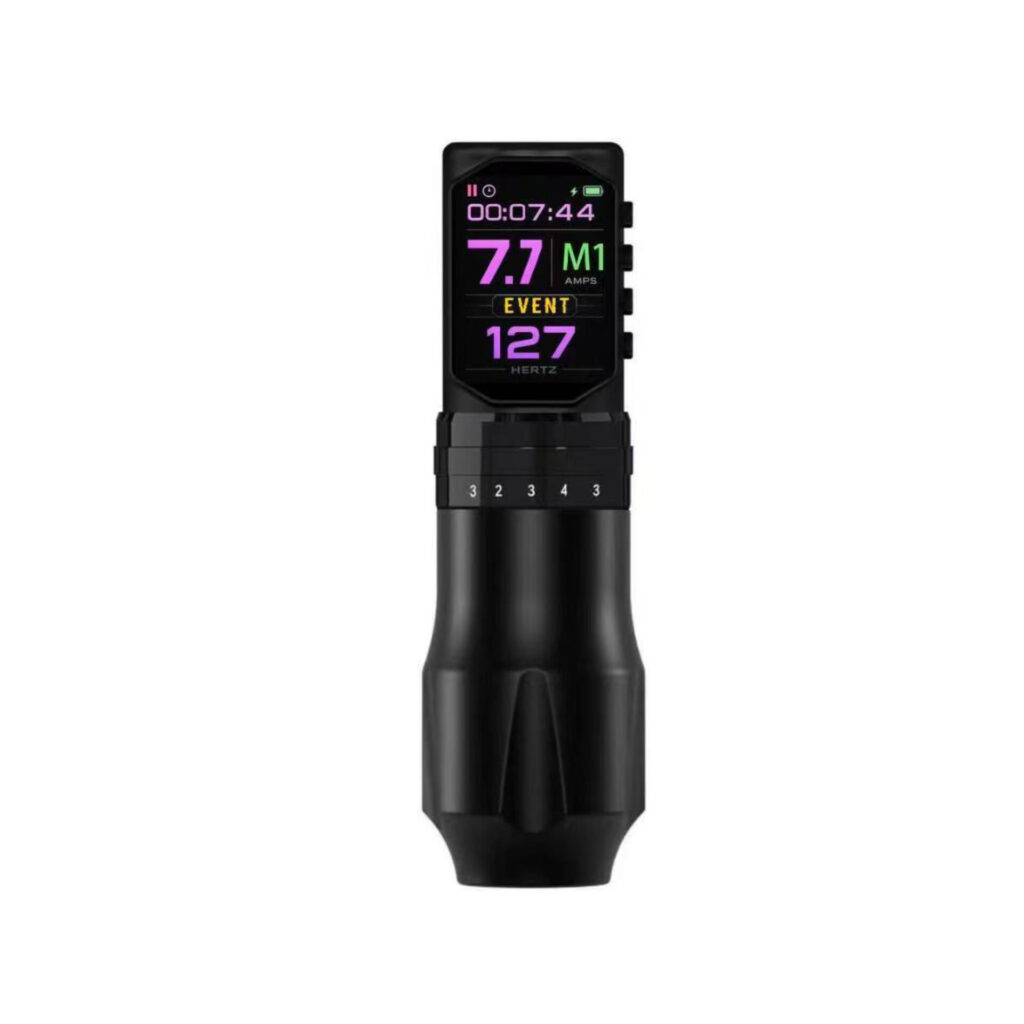
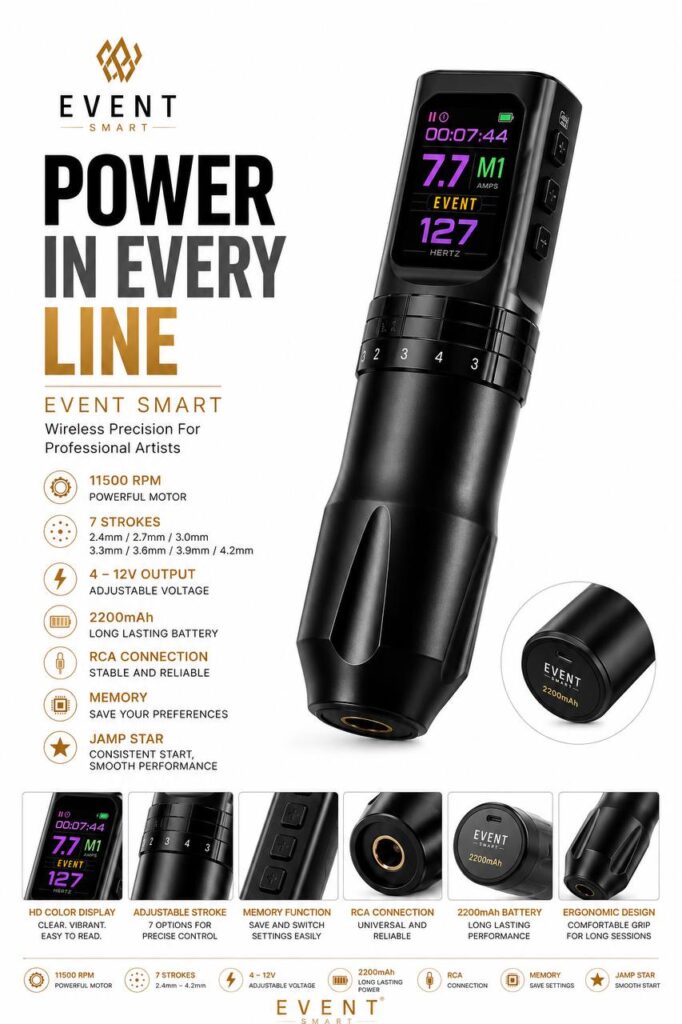
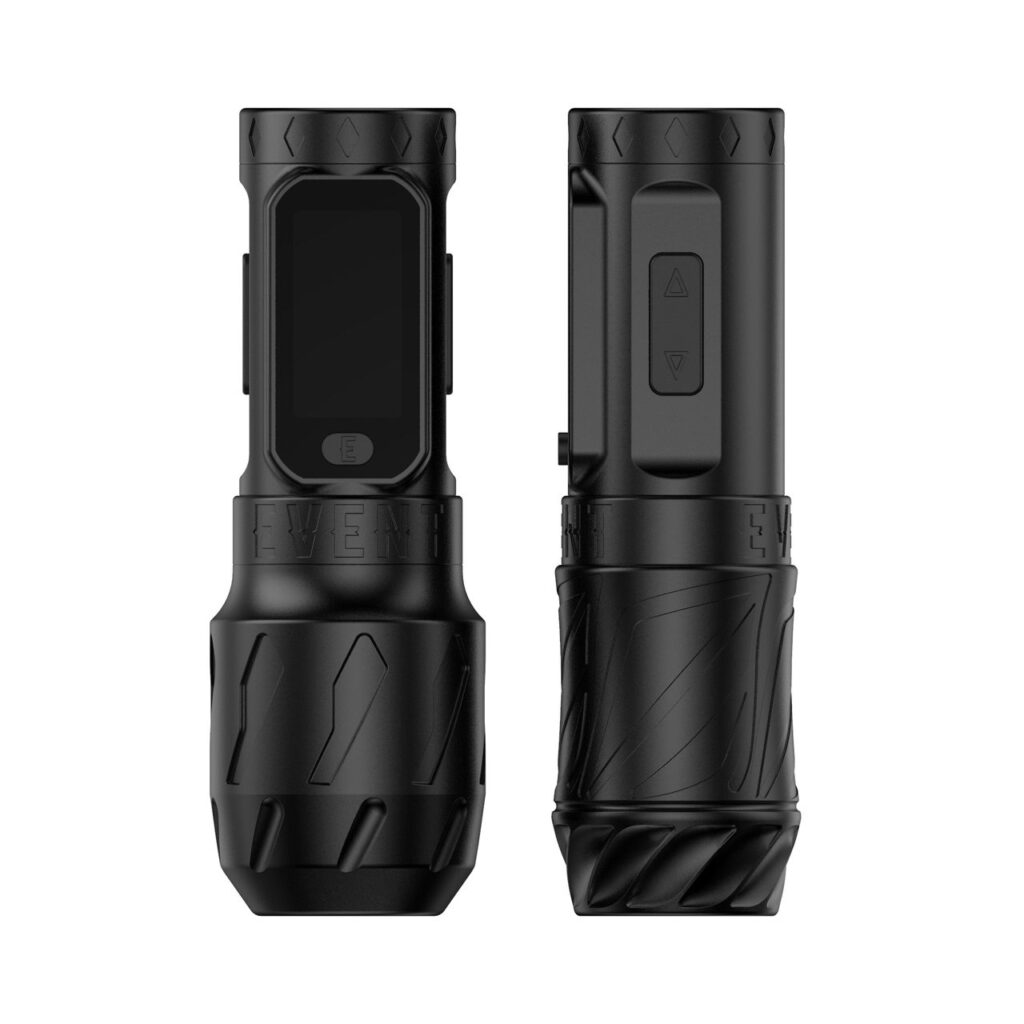
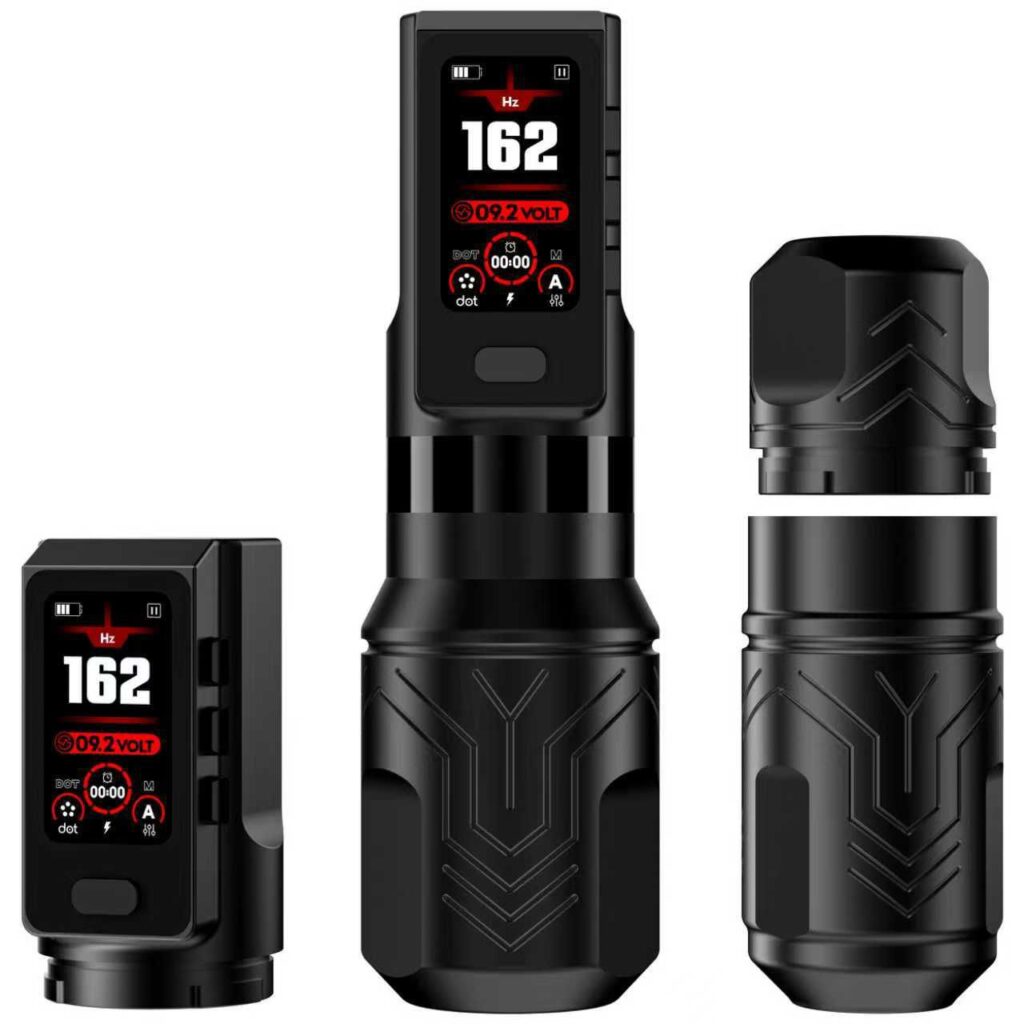
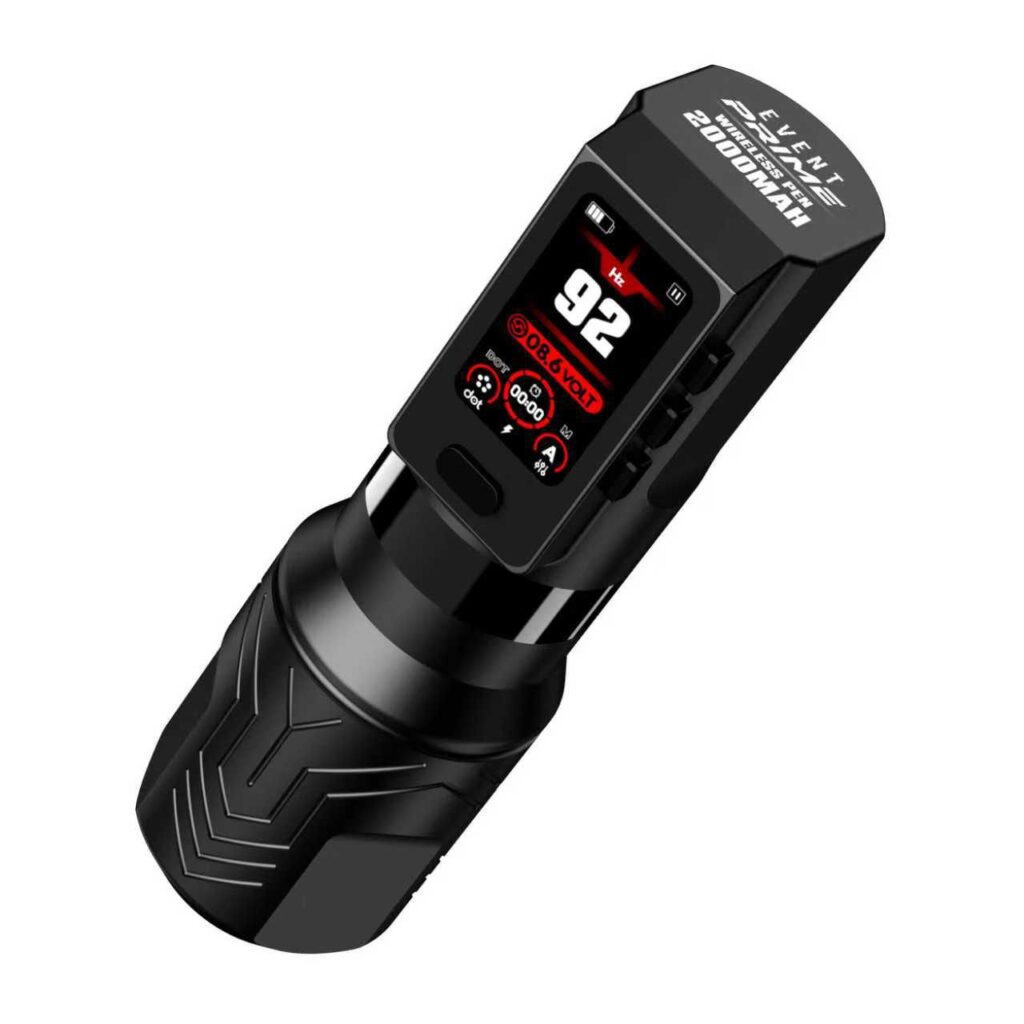
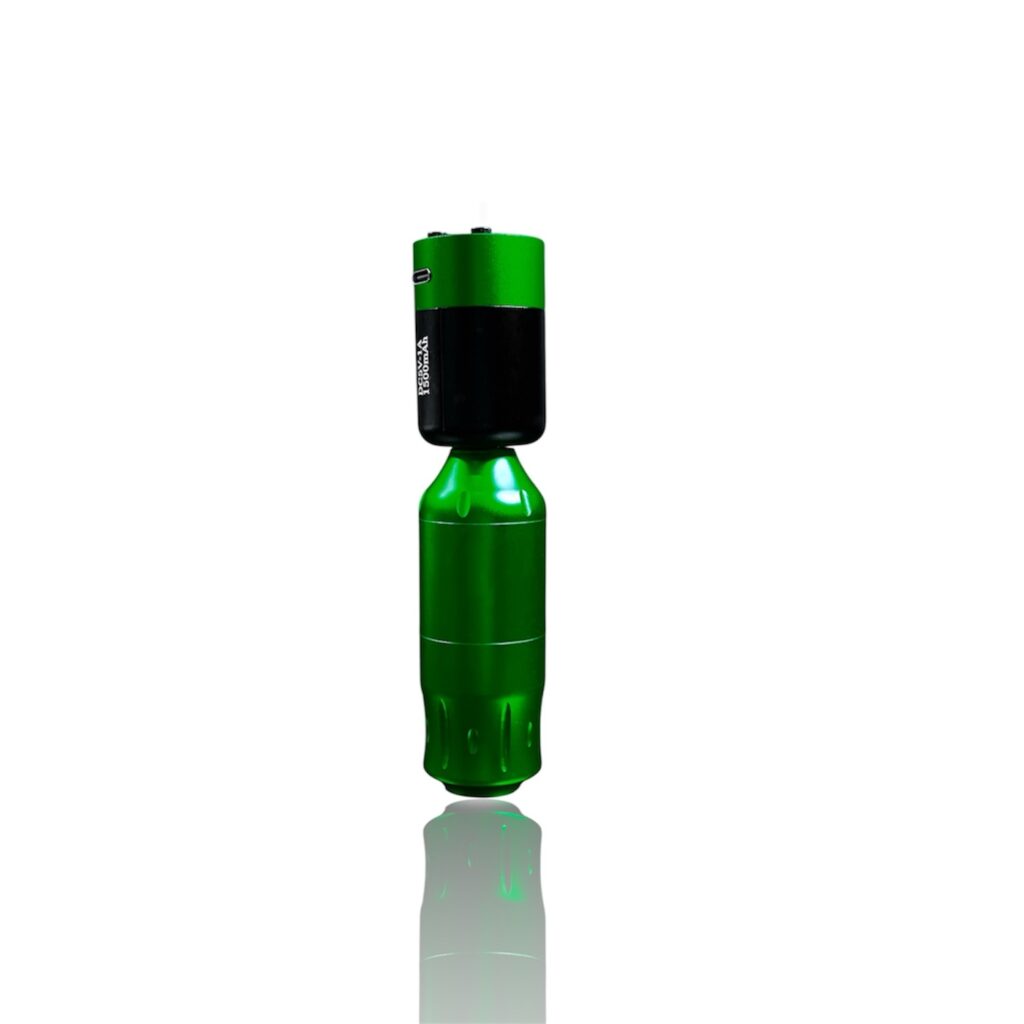
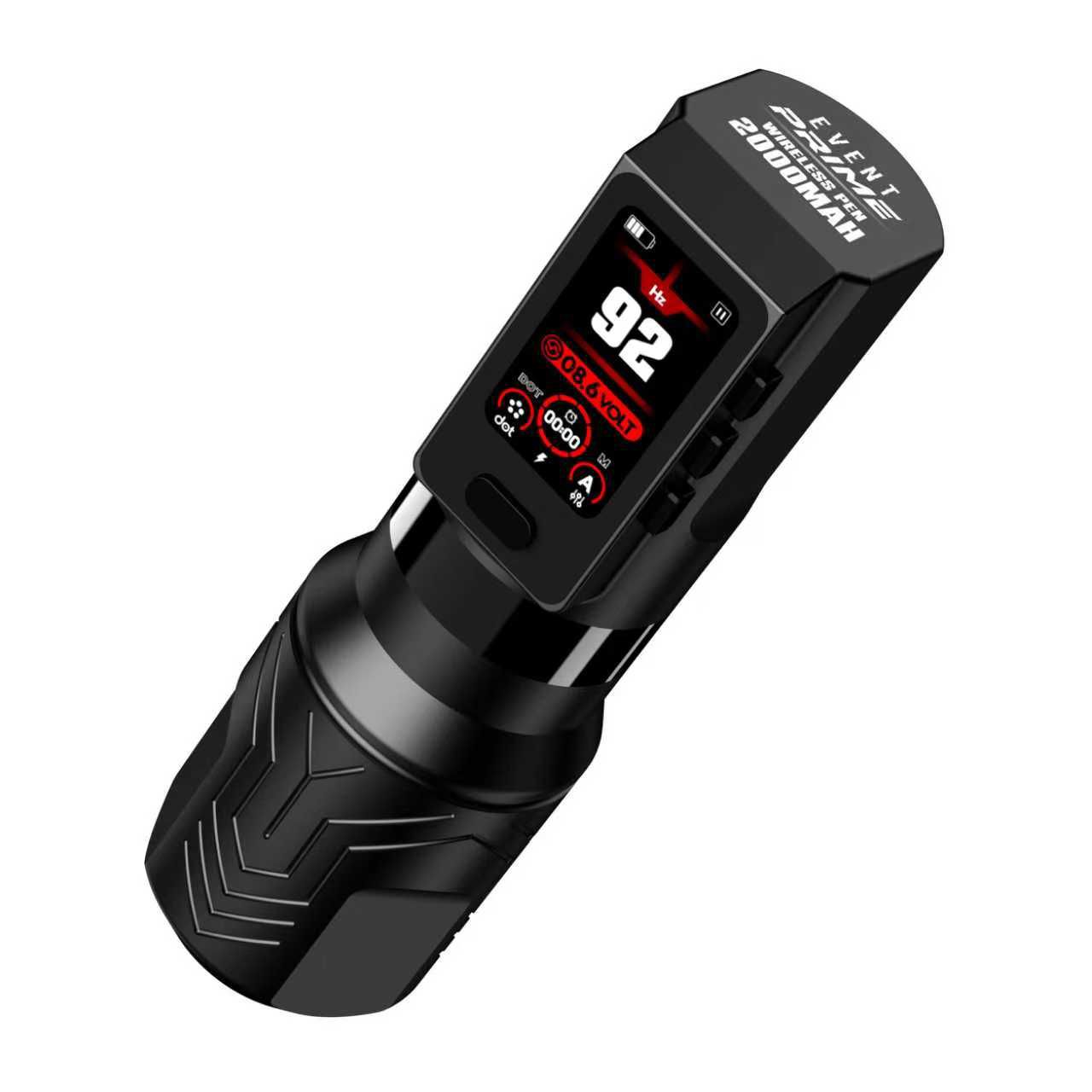
Event PRIME — click image to view product.
|
Battery realities & hot-swap workflowIn practice, battery strategy matters. For artists who run long sessions, a hot-swap workflow (swapping a battery without long downtime) or spare high-capacity packs reduces stress. Ask the seller for real runtime at a shading voltage; marketing idle numbers are rarely representative. Practical routine: start sessions with fully charged batteries, carry one spare per pen for 4+ hour appointments and two for marathon sessions (6+ hours). |
Stroke & RPM — matching tool to technique
Stroke length influences how the needle behaves. Short strokes favour fine lines and delicate blends; longer strokes offer more punch. Most artists prefer a mid-range stroke (~3.0–3.8 mm) for maximum versatility.
| Stroke | Best for | Artist note |
|---|---|---|
| ~3.0 mm | Fine line & subtle shading | Precise, lower trauma |
| ~3.5 mm | All-round | Most versatile |
| ~4.0 mm | Bold lining & packing | More punch — for experienced users |
|
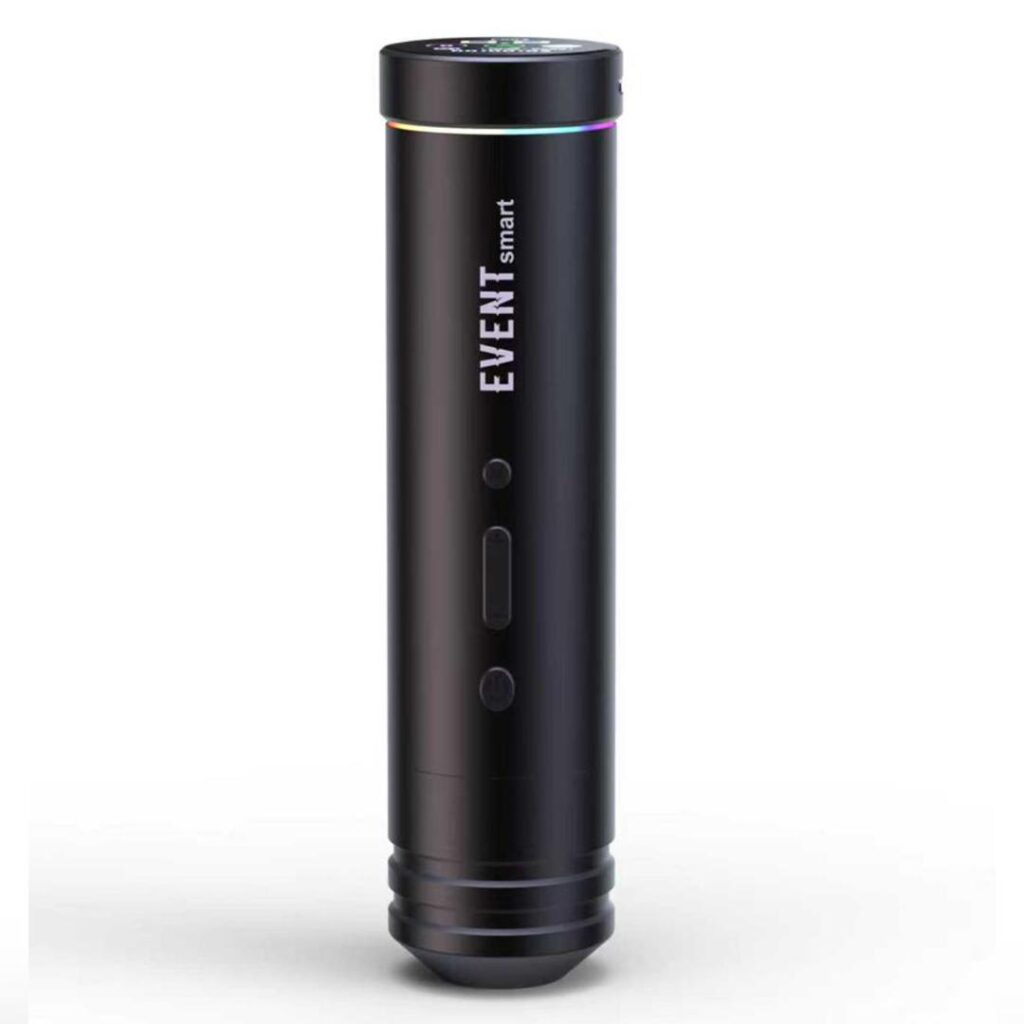
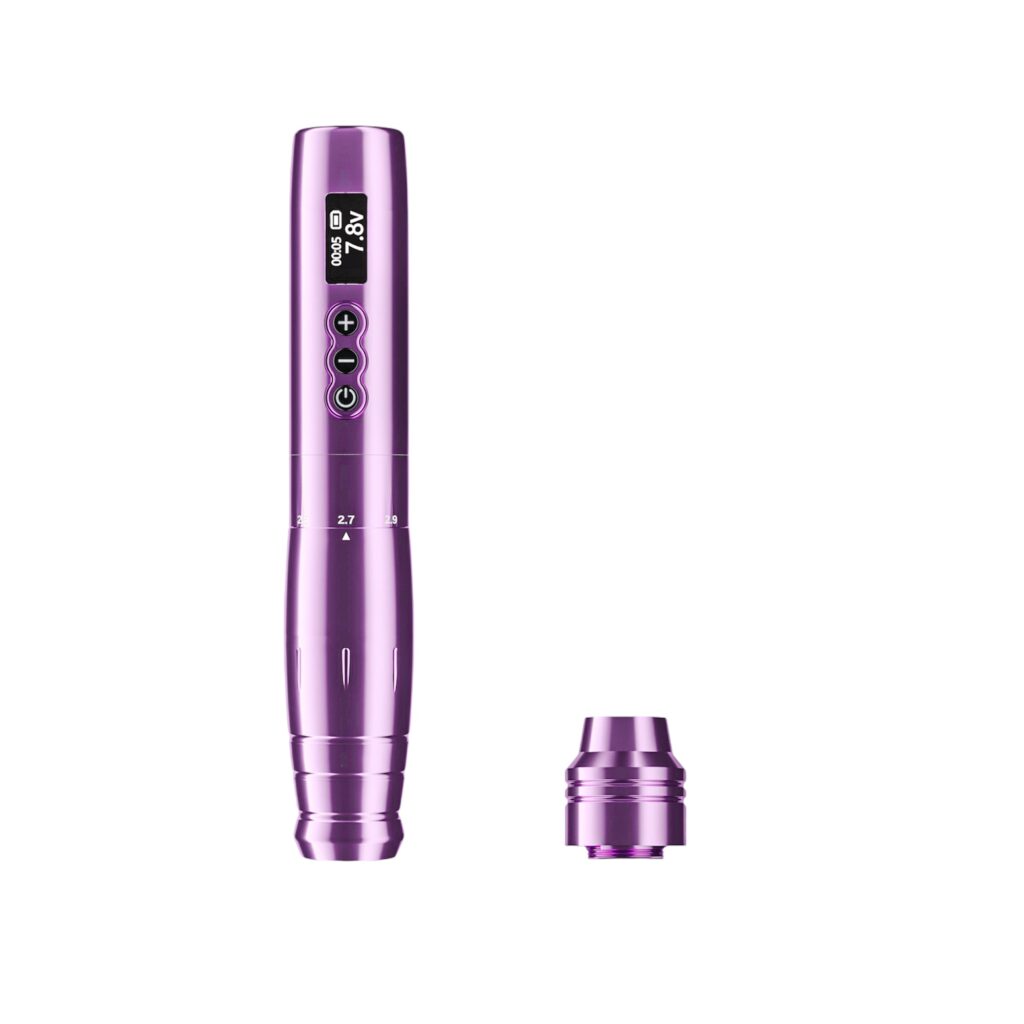
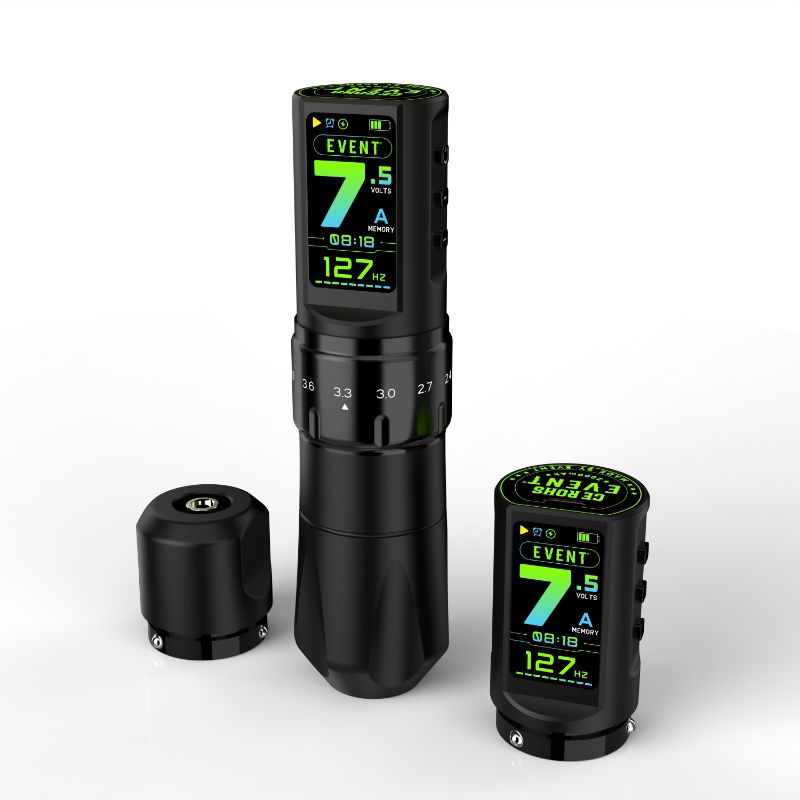
Event SHARK — click image to view product.
|
Ergonomics, balance and long-session comfortA well-balanced pen reduces micro-corrections and wrist fatigue. Grip diameter and textured surfaces are practical: they determine how the pen feels when your hands are slightly damp. Also test how the pen behaves over a 20–30 minute run — heat and comfort reveal themselves in sustained use. |
How cordless changes shading and lining technique
Removing cable drag affects micro-feedback. Many artists find circular and pendulum motions become smoother, which helps gradients. For lining, a cordless pen with steady return can feel nearly identical to a wired pen. The main point: cordless amplifies the positives of good technique and also magnifies weaknesses in poor gear.
- Shading: experiment with slightly larger circular strokes — cordless often smooths the motion.
- Whip shading: maintain consistent rhythm; a stable motor produces predictable texture.
- Lining: test needle return and crispness — cordless should not introduce wobble.
|
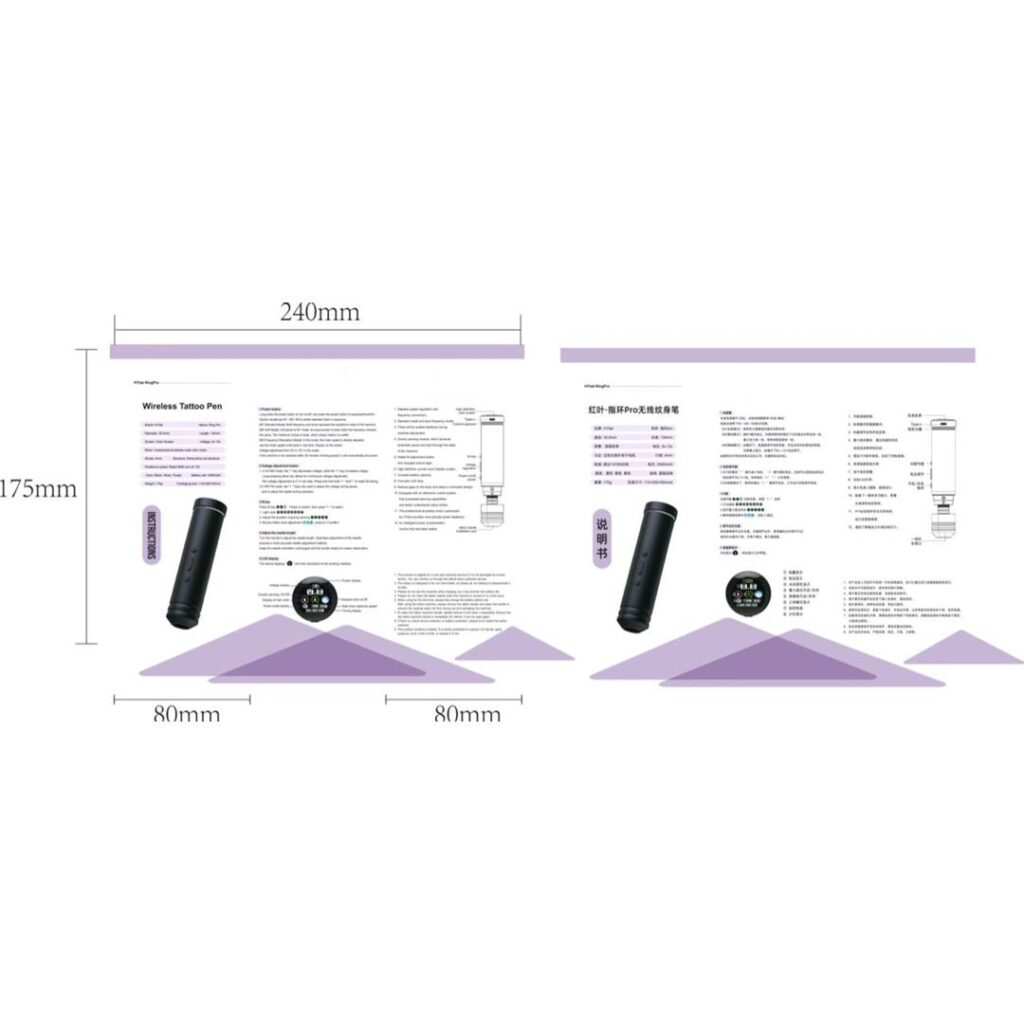
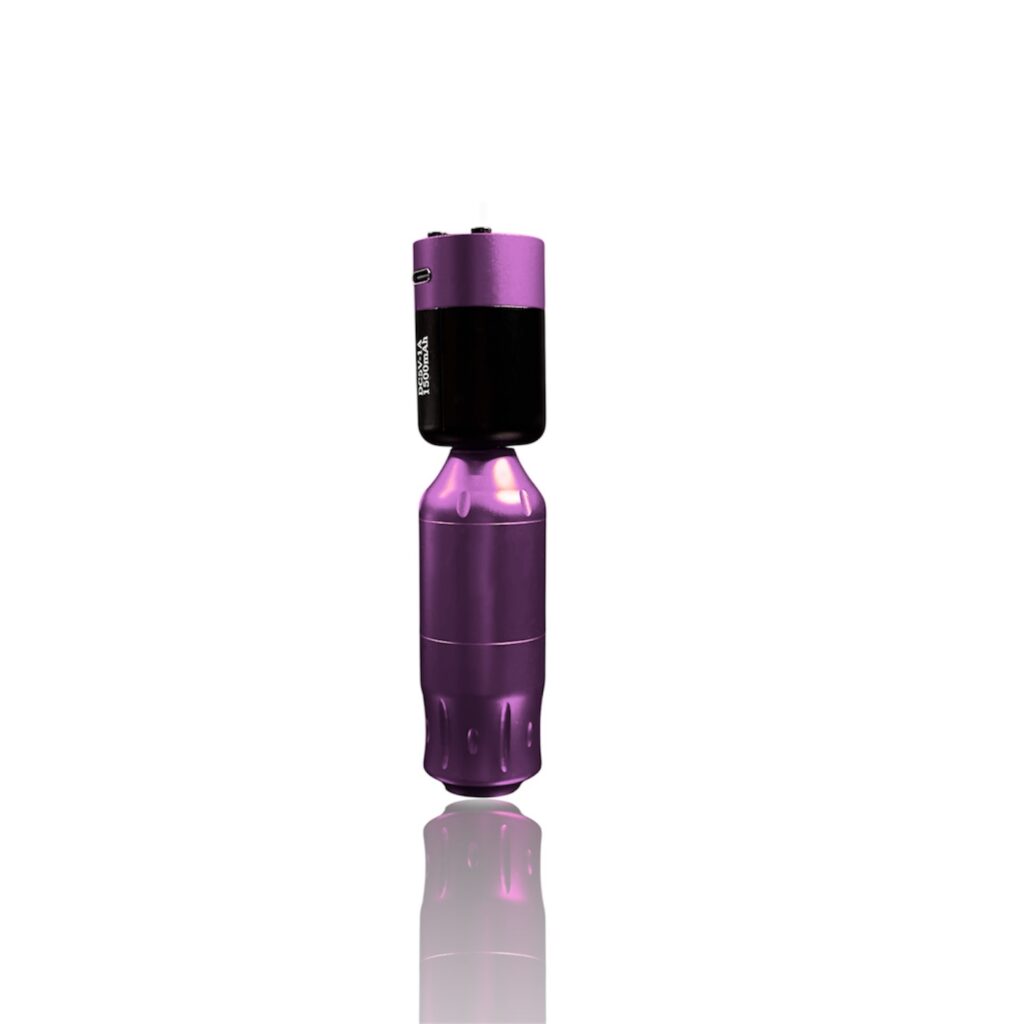
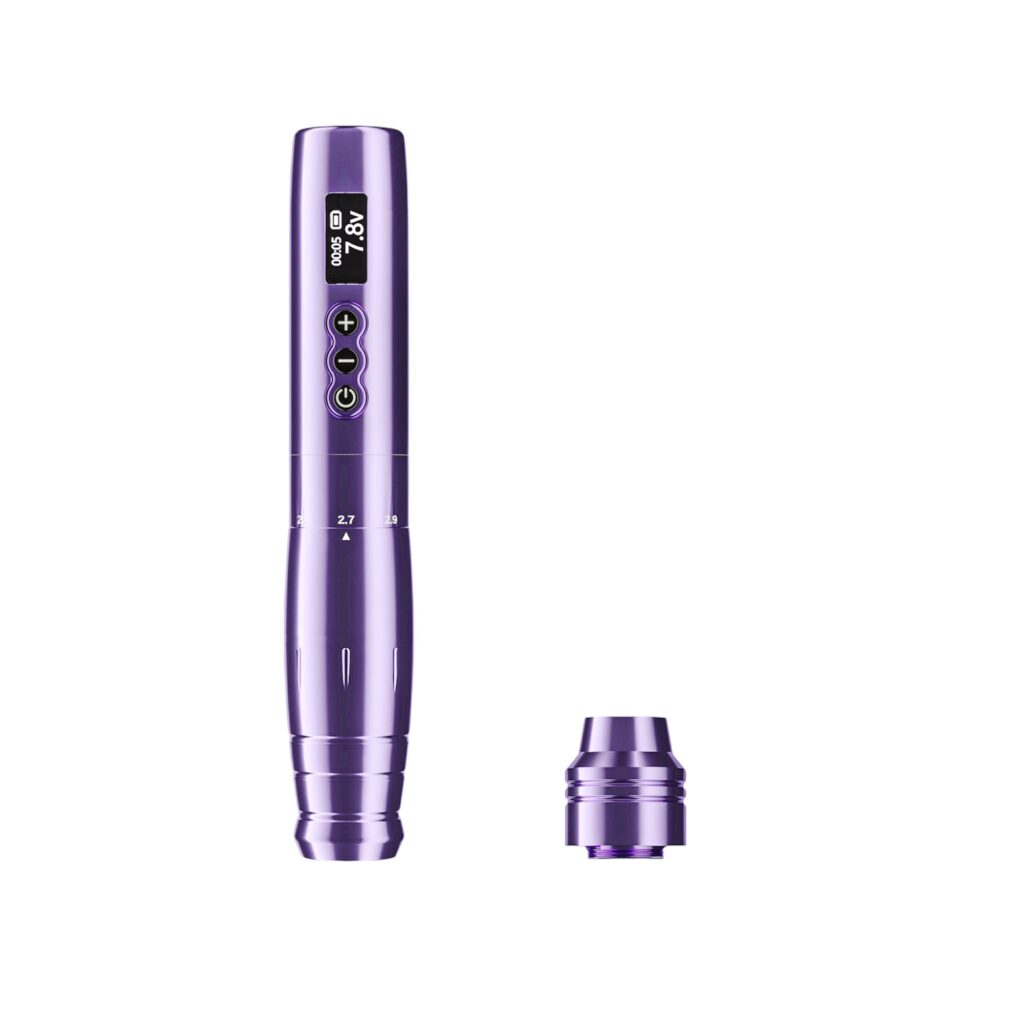
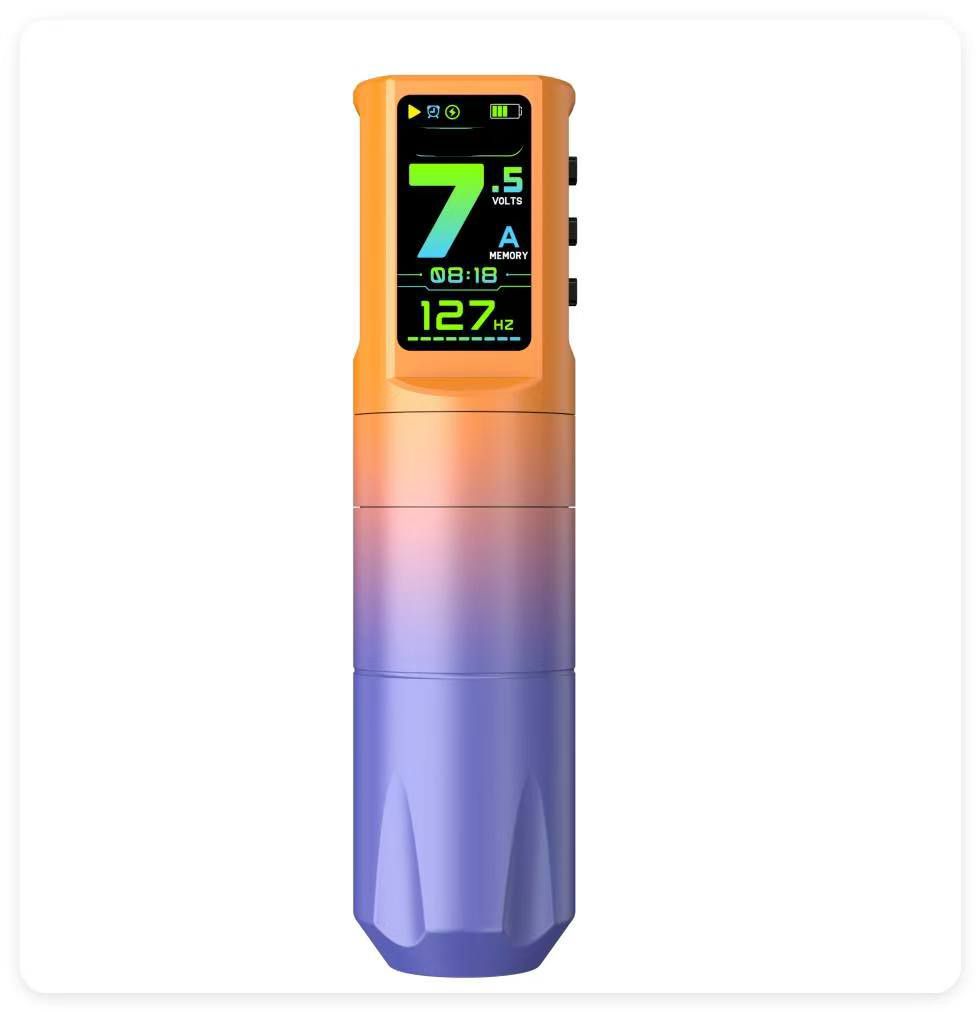
Event RAINBOW — click image to view product.
|
Practical voltage starting pointsThese are starting voltages — always test on practice skin and adjust for cartridges and client skin.
|
Maintenance, battery care & troubleshooting
Maintain your pen like any professional tool: wipe external surfaces with approved disinfectant wipes (avoid liquid ingress), keep cartridge seats clean, and follow battery manufacturer guidelines. Replace batteries that swell or suddenly lose capacity.
- Use only approved chargers and avoid cheap fast-chargers.
- Rotate batteries in storage; don’t leave them fully discharged for long periods.
- Keep contacts clean and dry between sessions.
- Service moving parts per manufacturer recommendations.
Quick troubleshooting
Power sag: swap the battery and clean the contacts. If the problem continues, test with another known-good pack — persistent sag means cell/BMS issues.
Vibration: reseat the cartridge, check for loose screws, and if the problem persists, contact support for motor/shaft service.
Grip heat: reduce continuous high-voltage runs and allow cooling breaks; consider a model with better heat management if this recurs.
FAQ — short answers artists search for
Is cordless reliable enough for pro work? Yes — when engineered properly. Many modern professional artists use cordless as their main rig. The trick is to test for motor stability and battery consistency.
How many spare batteries should I carry? For marathon sessions (6+ hours), at least one spare per battery in use. For regular days, one spare per pen is typically sufficient.
Does cordless reduce maintenance? Not necessarily. You’ll add battery care to your routine; mechanical maintenance is similar to other pen-style devices.
How do I order? We process orders through WhatsApp to confirm shipping, customs rules for batteries and available payment methods. Click any “Order via WhatsApp” link above or message: WhatsApp +86 134 2903 2695.
Final checklist before you buy
- Does the motor hold RPM when pressed into practice skin?
- Do you get predictable runtime at shading voltage — and can you swap batteries if needed?
- Does the pen remain comfortable and cool over a 20–30 minute demo?
- Are cartridges universal and do they seat without wobble?
- Is after-sales support and spare part availability clear?
Browse more devices: Event Tattoo — Devices
Need personalised help? Message us on WhatsApp.
Follow demos on Instagram: @event.tattoochina
Event Tattoo — professional devices and global shipping.